



Contact/s:
John Greaney
john.greaney@teagasc.ie
Reducing the Age of Slaughter to Mitigate GHG Emissions and Increasing Farm Profitability

Ireland
All Zones
- Reduction of GHG emissions
- Increased farm profitability
- Reducing the age of slaughter
Thematic Areas
Production System/s
Summary for Practicioners on the Main Finding(s)/Innovative solution(s)
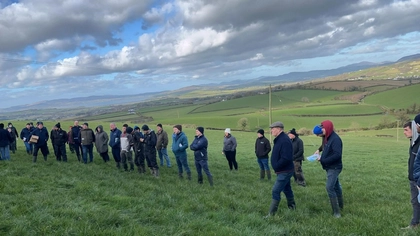
One of the key mitigation measures gaining popularity among beef pilot demo farmers in Ireland is reducing the age of slaughter. This action not only lowers total farm GHG emissions but also allows farmers to increase profitability by selling animals earlier. At a recent farm walk, Gareth Peoples set a goal to reduce the slaughter age from 27 months to 24 months.
Reducing slaughter age by three months can cut methane emissions by approximately 19 kg per animal over its lifetime. Since methane is more harmful than CO₂, this reduction is a valuable climate achievement.
Gareth explained that achieving greater weights at younger ages depends on several factors. Hitting key targets at weaning, yearling, and finishing stages ensures animals stay on track for optimal performance. He emphasized the importance of selecting dairy beef calves with higher genetic merit, using the Dairy Beef Index to purchase better-quality stock, focusing on carcass weight and conformation.
Another major advantage is the cost savings associated with earlier finishing. Farmers benefit from lower feed costs and reduced enteric fermentation emissions. To ensure continuous animal growth, farmers must focus on calf rearing, housing, and spring grassland management.
The demo event in Donegal highlighted the importance of adaptation and mitigation measures for reducing on-farm emissions. It also reinforced the value of knowledge sharing and collaboration in advancing sustainable agriculture through climate-smart farming.
Upcoming events in Ireland and across Europe will allow farmers to exchange insights, learn from each other, and work collectively toward a more resilient, climate-smart agricultural sector.