



Contact/s:
Alessandro Zatta
a.zatta@crpa.it
Carbon Farming as a Climate Change Adaptation and Mitigation Tool for Forage Production

Italy
Mediterranean area
- Soil organic matter
- Carbon farming
- Biodiversity
Thematic Areas
Production System/s
Summary for Practicioners on the Main Finding(s)/Innovative solution(s)
The phenomena that characterise climate change include rising temperatures, extreme events such as prolonged periods of drought followed by intense rainfall events, and a decrease in rainfall resulting in a decrease in agricultural production. The Mediterranean area is considered a climate change hotspot, i.e. where the phenomena listed above occur most frequently and most intensively. Carbon farming is considered a tool for facing and mitigating climate change because it aims to preserve soil fertility by maintaining or increasing organic matter. Maintaining soil fertility is essential to continue producing forage in terms of both quantity and quality.
Good practices that can be adopted include the following:
⦁ Reduce tillage:
⦁ Avoiding ploughing – high costs, limits soil bearing capacity and lengthens working time
⦁ Minimum tillage and/or no-tillage techniques
⦁ Biodiversity and crop rotation
⦁ Crops and genotypes adapted to new climatic conditions (e.g. from Southern Italy)
⦁ Crop associations (e.g. alfalfa and foxtail millet; wheat and forage peas; etc.)
⦁ Cover crop
⦁ Permanent meadows
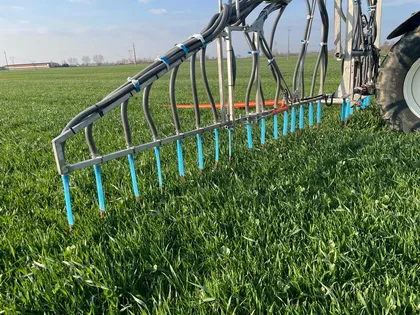
⦁ Rational manure management
⦁ Maturation of manure and slurry
⦁ Spreading according to crop needs
Summary for Practicioners in Native Language
I fenomeni che caratterizzano i cambiamenti climatici sono anche l’innalzamento delle temperature, eventi estremi come periodi prolungati di siccità seguiti da eventi piovosi intensi e la diminuzione della piovosità con conseguente calo delle produzioni agricole. Il mediterraneo è considerato un hotspot dei cambiamenti climatici, ossia dove i fenomeni sopra elencati avvengo più frequentemente ed in maniera più intensa. Il carbon farming è considerato uno strumento di contrasto e mitigazione dei cambiamenti climatici perché mira a preservare la fertilità dei suoli attraverso il mantenimento o l’incremento della sostanza organica. Il mantenimento della fertilità è fondamentale per continuare a produrre foraggio in termini sia quantitativi che qualitativi.
Le buone pratiche che si possono adottare sono le seguenti:
⦁ Ridurre le lavorazioni
⦁ Evitare l’aratura – costi elevati, limitano la capacità portante del suolo e allungano i tempi di lavoro
⦁ tecniche di minima lavorazione e/o no-tillage
⦁ Biodiversità e rotazione delle colture
⦁ Colture e genotipi adattati alle nuove condizioni climatiche (ad esempio, dal Sud Italia)
⦁ Associazione di colture (es. erba medica e panico; grano e piselli da foraggio; ecc.)
⦁ Cover crop
⦁ Prati permanenti
⦁ Gestione razionale del letame
⦁ maturazione del letame e del liquame
⦁ spandimento in base alle esigenze delle colture
Longer Description
The phenomena that characterise climate change include rising temperatures, extreme events such as prolonged periods of drought followed by intense rainfall events, and a decrease in rainfall resulting in a decrease in agricultural production. The Mediterranean area is considered a climate change hotspot, i.e. where the phenomena listed above occur most frequently and most intensively. Carbon farming is considered a tool for facing and mitigating climate change because it aims to preserve soil fertility by maintaining or increasing organic matter. Maintaining soil fertility is essential to continue producing forage in terms of both quantity and quality.
Good practices that can be adopted include the following:
⦁ Reduce tillage:
⦁ Avoiding ploughing – high costs, limits soil bearing capacity and lengthens working time
⦁ Minimum tillage and/or no-tillage techniques
⦁ Biodiversity and crop rotation
⦁ Crops and genotypes adapted to new climatic conditions (e.g. from Southern Italy)
⦁ Crop associations (e.g. alfalfa and foxtail millet; wheat and forage peas; etc.)
⦁ Cover crop
⦁ Permanent meadows
⦁ Rational manure management
⦁ Maturation of manure and slurry
⦁ Spreading according to crop needs