



Contact/s:
Rocco Lioy
rocco.lioy@convis.lu
Adaptation to Climate Change in Crop Production

Luxembourg
Continental Europe
- Challenges for crop production due to climate change
- Adaptation measures
- Research needs
Thematic Areas
Production System/s
Summary for Practicioners on the Main Finding(s)/Innovative solution(s)
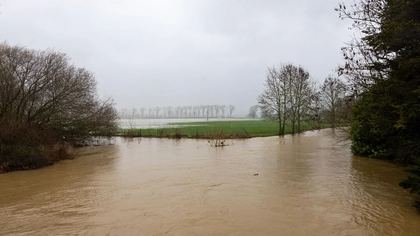
In Luxembourg, climate change is making itself felt in various ways, including the rise in temperature, the rapid alternation of extremely dry and wet periods and ever shorter winters, which result in a longer growing season. There are various strategies to meet these challenges. These relate to the following areas:
⦁ Breeding new plant varieties. These should ensure better adaptation to the changed climate conditions.
⦁ Diversification of crop rotation. This will make crop cultivation more resilient to climate fluctuations
⦁ Arable farming. The choice of the right sowing date and increasing the humus content in the soil are particularly important here.
⦁ Fodder production. In this area, the creation of fodder reserves and increasing biodiversity in grassland are crucial.
⦁ Introduction of new plant species. Grain millet, soya beans, sunflowers and sorghum are particularly promising in this respect.
⦁ Consideration of new pests and plant diseases. Defense against more aggressive types of pests and parasites has become essential due to climate change.
There is no generally applicable strategy for adapting to climate change in crop production. Only a combination of different existing techniques can successfully master the challenges posed by climate change.
There is a need for research in the following areas:
⦁ Provision of grass growth models for better adaptation of stock management to weather conditions
⦁ Specification of the possibilities and limits of using autumn gras growth to derive maximum benefit from it.
⦁ Breeding varieties with higher adaptation to climate change.
⦁ Maximizing nutrient efficiency under unfavorable weather conditions.
⦁ Provision of reliable meteorological information.
⦁ Clarification of the influence of humus balance and biochar on the water balance.
Summary for Practicioners in Native Language
In Luxemburg macht sich der Klimawandel auf verschiedene Weise bemerkbar, unter anderem durch den Temperaturanstieg, die rasche Abwechselung von extrem Trocken- und Nässeperioden und immer kürzere Winter, welche eine längere Vegetationsperiode als Folge haben. Um diese Herausforderungen zu begegnen, gibt es verschiedene Strategien. Diese betreffen folgende Gebiete:
⦁ Züchtung neuer Pflanzensorten. Diese sollen eine bessere Anpassung an die veränderten Klimabedingungen gewährleisten.
⦁ Diversifizierung der Fruchtfolge. Dadurch wird eine höhere Resilienz im Pflanzenbau gegenüber Klimaschwankungen erreicht
⦁ Ackerbau. Hier sind besonders die Wahl des richtigen Saattermins und die Steigerung der Humusgehalte im Boden zu nennen.
⦁ Futterproduktion. Auf diesem Gebiet sind das Anlegen von Futterreserven sowie die Steigerung der Artenvielfalt im Grünland ausschlaggebend.
⦁ Einführung neuer Pflanzenarten. Diesbezüglich sind vor allem die Körnerhirse, die Sojabohne, die Sonnenblume und das Sorghum vielversprechend.
⦁ Berücksichtigung von neuen Schädlingen und Pflanzenkrankheiten. Sich gegen aggressivere Arten von Schädlingen und Parasiten ist durch den Klimawandel unabdingbar geworden.
Eine allgemeingültige Strategie zur Anpassung an den Klimawandel im Pflanzenbau ist nicht vorhanden. Nur eine Kombination aus verschiedenen vorhandenen Techniken kann erfolgreich die Herausforderungen durch den Klimawandel meistern.
Forschungsbedarf besteht auf folgenden Gebieten:
⦁ Bereitstellung von Grasaufwuchs-Modellen zur besseren Anpassung der Bestandsführung an die Witterungsbedingungen
⦁ Präzisierung von Möglichkeiten und Grenzen der Nutzung von Herbstaufwuchs, um ein maximales Nutzen daraus zu ziehen.
⦁ Züchtung von Sorten mit höherer Anpassung an den Klimawandel.
⦁ Maximierung der Nährstoffeffizienz unter ungünstiger Witterungsbedingungen.
⦁ Bereitstellung von verlässlichen Meteo-Informationen.
⦁ Klärung des Einflusses von Humushaushalt und Pflanzenkohle auf den Wasserhaushalt.
Longer Description
In Luxembourg, climate change is making itself felt in various ways, including the rise in temperature, the rapid alternation of extremely dry and wet periods and ever shorter winters, which result in a longer growing season. There are various strategies to meet these challenges. These relate to the following areas:
⦁ Breeding new plant varieties. These should ensure better adaptation to the changed climate conditions.
⦁ Diversification of crop rotation. This will make crop cultivation more resilient to climate fluctuations
⦁ Arable farming. The choice of the right sowing date and increasing the humus content in the soil are particularly important here.
⦁ Fodder production. In this area, the creation of fodder reserves and increasing biodiversity in grassland are crucial.
⦁ Introduction of new plant species. Grain millet, soya beans, sunflowers and sorghum are particularly promising in this respect.
⦁ Consideration of new pests and plant diseases. Defense against more aggressive types of pests and parasites has become essential due to climate change.
There is no generally applicable strategy for adapting to climate change in crop production. Only a combination of different existing techniques can successfully master the challenges posed by climate change.
There is a need for research in the following areas:
⦁ Provision of grass growth models for better adaptation of stock management to weather conditions
⦁ Specification of the possibilities and limits of using autumn gras growth to derive maximum benefit from it.
⦁ Breeding varieties with higher adaptation to climate change.
⦁ Maximizing nutrient efficiency under unfavorable weather conditions.
⦁ Provision of reliable meteorological information.
⦁ Clarification of the influence of humus balance and biochar on the water balance.