


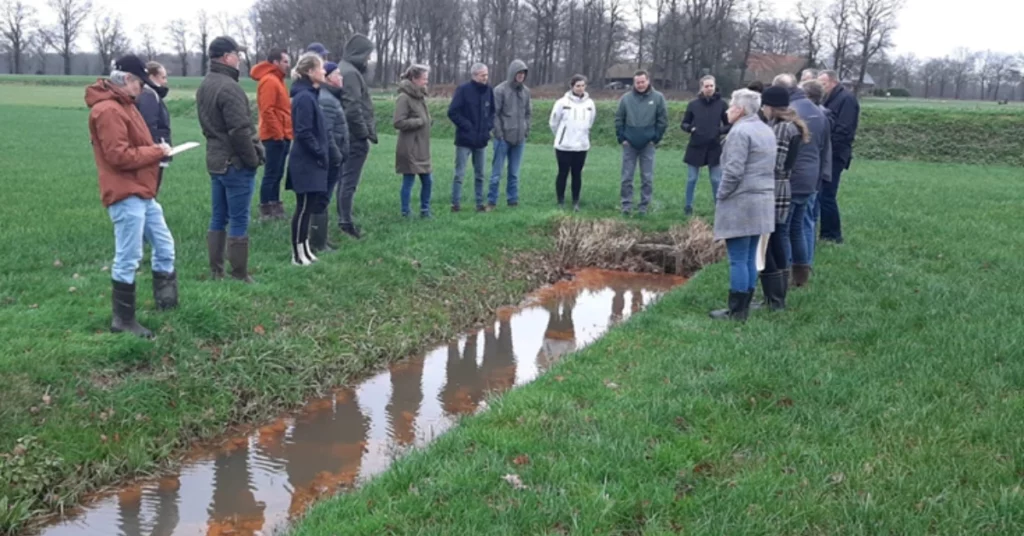
In the Veenkoloniën region of the Netherlands, water is becoming an increasingly scarce and valuable resource. Changing weather patterns, longer dry periods, and rising pressure on water supplies are forcing farmers and regional actors to rethink how water is stored, shared, and used across the landscape.
The Dutch Living Lab on Climate-Smart Water Management was created to tackle these challenges head-on. By testing practical solutions such as above-ground water storage and bringing farmers together with water authorities, researchers, and regional partners, the Living Lab turns real-world challenges into opportunities for learning and innovation. Workshops, on-farm experiments, and decision-support tools help farmers explore what climate-smart water management looks like in practice and what it means for their farms.
To better understand how this collaborative approach works on the ground, we spoke with Emma Knol, Living Lab facilitator, about the challenges facing the region, the solutions being tested, and the role of farmers in shaping climate-smart water management in the Veenkoloniën.
What were your first impressions of the Living Lab, and what were your initial expectations?
The first impressions of our Living Lab were shaped during the initial workshop on water-related measures. During this workshop, we focused on the applicability and feasibility of measures in everyday agricultural practice. These sessions highlighted the importance of translating climate-smart farming practices into solutions that genuinely fit farmers’ day-to-day activities.
As Living Lab monitors and facilitators, we observed that it is not easy to generate sustained attention for the topic of water, as it often competes with more immediate operational concerns. Although water availability already poses challenges at certain moments, it is not yet a high priority for most farmers. As a result, discussions tended to focus on short-term problems and solutions rather than long-term water availability.
In this context, the Living Lab setting could offer a valuable opportunity to initiate these conversations, particularly through the collaboration with the local water authority. This cooperation created a constructive environment to bring water-related issues onto the agenda and to jointly explore challenges and potential solutions.
Do you believe the plans set forth are realistic and achievable? Why?
Although finding our way in the discussion regarding water measures on farm level, we believe that the plans we developed within the Living Lab are realistic and achievable. We have been continuously testing and adjusting our approach in close interaction with practice. This has led us to sharpen and refine the Living Lab focus.
Initially the Living Lab in the Netherlands was designed around a strong focus on a single water measure: above-ground water storage. This measure emerged from the original Living Lab design. In discussions with farmers we came to the conclusion that this measure was less realistic in practice than anticipated, partly due to high land prices. These insights made clear that a more flexible approach was needed.
As a result, we broadened our focus towards water measures in general. Our central question then became whtich water-related measures are feasible at farm or regional level, and were opportunities lie in the near-future. This shift allowed us to better align the Living Lab with farmers’ realities while still addressing water and climate challenges.
We believe that it is essential to continue this dialogue with farmers and other stakeholders about the realism and feasibility of measures, while also creating awareness regarding the urgency of water and climate issues. As a Living Lab, we want to create space to keep the conversation going and to gradually build a shared understanding of water related issues and their solutions.
Can you share some of your experiences and insights gained so far with LL and in this project in general?
One of the key insights we have gained so far is that water is not yet perceived as the most urgent issue in agricultural practice. When water-related challenges are not immediately pressing, it has proven helpful to frame the discussion within related themes, such as climate resilience or farm development. This will eventually create space to still engage in the conversation about water. Developing an framework with an overview of possible water measures could help provide a starting point for the discussion.
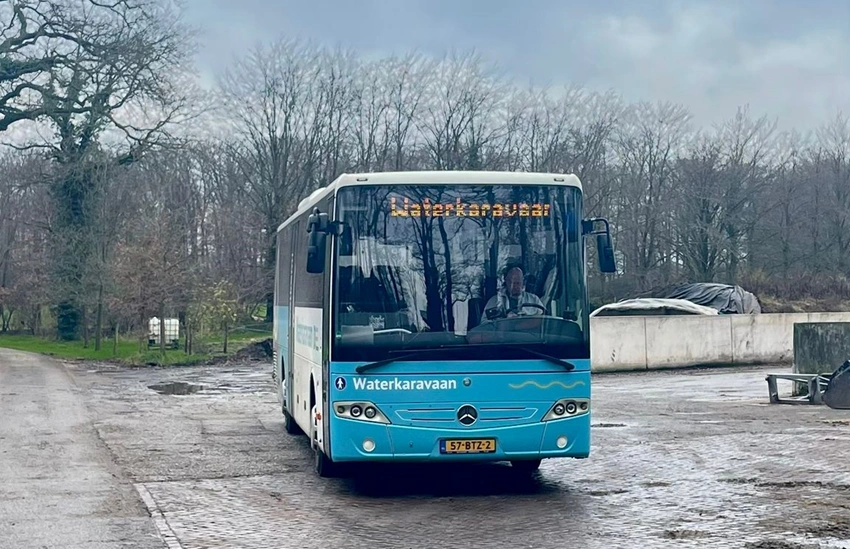
At the same time, our experiences show that growing attention is being paid to long-term water availability by an increasing number of stakeholders. In particular, organising a water tour in which different stakeholders were brought together in a bus to visit implemented water measures on site, has led to valuable and in-depth conversations. Sharing these experiences in collective setting helped to discuss different perspectives and considerations around water measures, and strengthened mutual understanding between stakeholders.
What are some next steps?
One of the key insights we have gained so far is that water is not yet perceived as the most urgent issue in the Dutch agricultural practice. When water-related challenges are not immediately pressing, it has proven helpful to frame the discussion within related themes, such as climate resilience or farm development. This will eventually create space to still engage in the conversation about water. Developing a framework with an overview of possible water measures could help provide a starting point for the discussion.
At the same time, our experiences show that growing attention is being paid to long-term water availability by an increasing number of stakeholders. In particular, organising a water tour in which different stakeholders were brought together in a bus to visit implemented water measures on site, has led to valuable and in-depth conversations. Sharing these experiences in collective setting helped to discuss different perspectives and considerations around water measures, and strengthened mutual understanding between stakeholders.