



Contact/s:
Sara Carè
sara.care@crea.gov.it
Digitalization and Precision Livestock Farming: What are the Benefits for Reducing the Environmental Impact in Dairy Farms

Italy
Mediterranean area
- Animal welfare
- Farm production efficiency
- Environmental sustainability
Thematic Areas
Production System/s
Summary for Practicioners on the Main Finding(s)/Innovative solution(s)
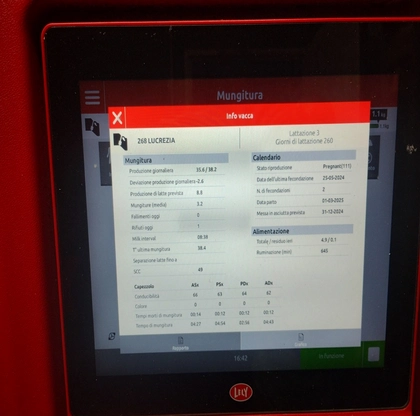
Precision Livestock Farming (PLF) represents a new opportunity for dairy farms to address market challenges by improving the efficiency of company production, enhancing both animal welfare, thanks to the ability to monitor and manage the individual and not just the group, and the sustainability of production. PLF is the use of technologies to measure physiological, behavioral, productive and reproductive indicators on individual animals, with the aim of improving management strategies and the performance of the subjects raised. The application of these technologies allows the collection and management of a large amount of information, which, if managed optimally, can be of great help in managing and controlling the herd in an effective and profitable way.
With PLF, various parameters can be monitored to evaluate the state of health, animal welfare, productive and reproductive performance of the farm, which are closely related to the environmental impact. It has been shown that the reduction of mastitis resulting from the timely recognition of the pathology can lead to a 2.5% decrease in global warming potential as well as a reduction in the use of antibiotics. (See Tullo et. Al, 2019) Good management of the reproductive status of animals can contribute to reducing environmental impact. In fact, by maintaining fertility at the highest level, it is believed possible to reduce the farm’s GHG emissions by more than 20%. (See Tullo et. Al, 2019) The PLF, if used well, allows the breeder to make some decisions more promptly, thus improving the productivity and profitability of his farm. To make the most of the information obtained with these technologies and interpret them correctly, it is essential that they are integrated with computerized information systems capable of managing and processing the enormous “amount” of data produced and that there are qualified personnel in the stable who knows how to interpret them.
Summary for Practicioners in Native Language
La zootecnia di precisione (Precision Livestock Farming, PLF), rappresenta la nuova opportunità per gli allevamenti da latte per affrontare le sfide dei mercati attraverso un miglioramento dell’efficienza di produzione aziendale, valorizzando sia il benessere animale, grazie alla possibilità di monitorare e gestire il soggetto e non solo il gruppo, sia la sostenibilità delle produzioni. La PLF è l’utilizzo di tecnologie per misurare indicatori fisiologici, comportamentali, produttivi e riproduttivi sui singoli animali, con l’obiettivo di migliorare le strategie gestionali e le performance dei soggetti allevati. L’applicazione di queste tecnologie permette il rilievo e la gestione di un grande numero di informazioni, che, se gestito in maniera ottimale, può risultare di grande aiuto per gestire e controllare la mandria in maniera efficace e remunerativa. Con la PLF si possono monitorare diversi parametri con cui si valuta lo stato di salute, il benessere animale, le performance produttive e riproduttive dell’allevamento, che sono strettamente correlati all’impatto ambientale. E’ stato dimostrato che la riduzione delle mastiti derivante dal riconoscimento tempestivo della patologia può comportare una diminuzione del 2,5% del potenziale di riscaldamento globale oltre che ad una riduzione nell’utilizzo degli antibiotici. Una buona gestione dello stato riproduttivo degli animali può contribuire alla riduzione dell’impatto ambientale. Infatti, mantenendo la fertilità al massimo livello, si ritiene possibile ridurre l’emissione di gas serra aziendale per più del 20%. La PLF, se ben utilizzata, consente all’allevatore di prendere con più tempestività alcune decisioni, migliorando in questo modo la produttività e la redditività del proprio allevamento. Per sfruttare al massimo le informazioni ottenute con queste tecnologie ed interpretarle in maniera corretta, è fondamentale che queste siano integrate con sistemi informativi computerizzati in grado di gestire ed elaborare l’enorme “mole” di dati prodotti e che ci sia in stalla del personale qualificato che li sappia interpretare.
Additional Information
Precision Livestock Farming (PLF) represents a valuable opportunity for dairy farms to respond to market challenges by increasing production efficiency, enhancing animal welfare—thanks to the ability to monitor and manage animals individually rather than as a group—and improving the overall sustainability of production.
PLF refers to the application of engineering principles and techniques in livestock farming to automatically monitor, model, and manage animal production. Through these technologies, it is possible to measure physiological, behavioral, productive, and reproductive indicators at the individual animal level. The goal is to improve management strategies and animal performance, making livestock farms more sustainable economically, environmentally, and socially.
The use of PLF technologies enables the collection and management of large volumes of data, which—if handled effectively—can significantly improve herd control in a cost-efficient and productive manner. Animal scan be identified and tracked via GPS and image analyzers, which are useful for observing animal behavior and conducting automated assessments of body weight, Body Condition Score, and foot lesions. Realtime monitoring tools such as activometers, collars, body temperature sensors, milking robots, and devices based on near-infrared spectroscopy(NIRS) provide valuable information on health status, welfare, and productive and reproductive performance, all of which are closely linked to environmental impacts and milk quality.
Studies have shown that timely identification and management of mastitis through PLF technologies can lead to a 2.5% reduction in global warming potential, in addition to decreased antibiotic usage. Proper reproductive management can also reduce environmental impacts; maintaining optimal fertility levels may decrease greenhouse gas emissions from the farm by more than 20%.
Furthermore, monitoring the chemical composition of animal diets using precision feeding technologies can boost herd productivity while reducing enteric methane emissions and nitrogen excretion, thereby lowering emissions from livestock waste.
When effectively implemented, PLF empowers farmers to make more timely and informed decisions, improving productivity, profitability, and veterinary drug use on the farm. However, to fully capitalize on the potential of these technologies, it is crucial to integrate them with computerized information systems capable of processing the vast amount of data generated. Equally important is the presence of qualified personnel on-site who can correctly interpret and act on this information.