



Contact/s:
Arran Redman
arranr@i4agri.org
Richard Lloyd
richardl@i4agri.org
Megan Dunn
megand@i4agri.org
Modular Anaerobic Digestion Systems for Circular Agriculture

UK
NW Europe Maritime Climate
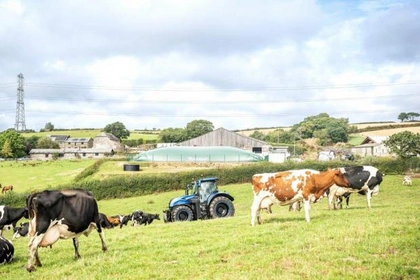
- Methane capture and biogas production for renewable energy
- Improved nutrient recycling and organic fertiliser production
- Compliant manure management and storage
Thematic Areas
Production System/s
Summary for Practicioners on the Main Finding(s)/Innovative solution(s)
Anaerobic digestion (AD) provides a sustainable solution for agricultural waste by capturing methane from slurry, reducing greenhouse gas emissions, and producing renewable energy. Farms benefit from biogas generation for electricity and heat, while modular systems allow accessibility across sectors. AD also creates organic fertilisers rich in nitrogen, phosphorus, potassium, and sulphur, reducing dependence on synthetic inputs.
Biogas production efficiency ranges from 60% to 98%, with gases used in the green gas grid, transport, or on-site in methane-powered machinery. Combined heat and power generators maximise energy self-sufficiency. The byproduct, digestate, can be processed into organic fertilisers, typically containing 0.12–1.5% nitrogen, 0.04–0.26% phosphorus, and 0.12–1.15% potassium, with dry matter content from 1.5% to 45.8%. Processing can concentrate these nutrients to around 30% nitrogen, 15% phosphorus, and 15% potassium.
Scalable and adaptable, AD integrates one-stage, two-stage, or three-stage digestion to improve gas extraction and waste processing. Modular systems focus on single-phase digestion, achieving up to 95% methane extraction. While initial investment is higher than traditional slurry storage, AD is becoming more cost-effective through modular innovations and financial incentives. Economic viability is enhanced through energy sales, carbon credits, and rising green finance interest.
AD improves farm sustainability, reduces costs, and generates revenue. Customisable modular systems fit different herd sizes, infrastructure, and energy demands. Advisors support adoption through feasibility studies and carbon audits. Policymakers should expand incentives for AD adoption, supporting carbon sequestration and renewable energy. ROI is expected within four to ten years, potentially accelerated by carbon market opportunities. By adopting AD, farms cut methane emissions, enhance nutrient management, and contribute to a circular agricultural economy.