



Contact/s:
Maria Pereira da Silva
mpereira@consulai.com
Water Management on Raspberry Farm on the South of Portugal

Portugal
Mediterranean zone
- Water Use Efficiency
- Environmental Sustainability
- Agricultural Resilience
Thematic Areas
Production System/s
Summary for Practicioners on the Main Finding(s)/Innovative solution(s)
Water management plays a key role in Portuguese agriculture, considering the challenges posed by climate change. Rising temperatures, more frequent drought periods, and increasing variability in precipitation and in water availability, making the adoption of more efficient strategies essential.
In the specific case of The Summer Berry Company, located in semi-arid regions of Portugal, a responsible water management and mitigating the risks associated with water scarcity are key objectives of the company’s environmental strategy. The main commitments include:
⦁ Maintaining continuous assessment of the farm’s water resources and developing a management plan adapted to their current state
⦁ Reducing water consumption and increasing overall efficiency in its use (irrigation systems adapted to local conditions, regular water consumption monitoring through precision equipment (humidity sensors))
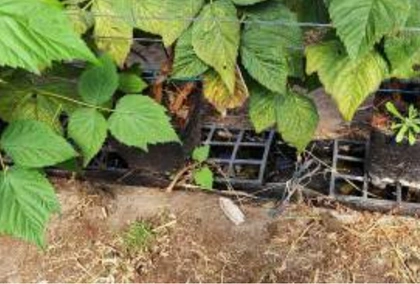
⦁ Preserving and improving water quality in ecosystems by planting species in water lines to avoid nutrient runoff
⦁ Maximizing water reuse and recycling by installing water reservoirs
⦁ Using greywater for hedge irrigation and other unproductive areas
In 2024, the company successfully increased the use of sustainable water sources, with 60% of the water used on its farms coming from storing rainwater and using open and closed hydraulic irrigation systems. This figure represents an increase compared to 2023 (53%) and 2022 (43%). As a result, dependence on the Santa Clara Dam was reduced to just 40%.
Finally, light and shade regulation is another key strategy. Shading nets are periodically adjusted according to weather conditions, covering plants on hot days to reduce excessive evaporation. On more humid days, the nets are removed to stimulate plant activity and maintain the photosynthesis process. This approach not only promotes the healthy development of crops but also contributes to water conservation, reinforcing the company’s commitment to sustainability.
Summary for Practicioners in Native Language
A gestão da água no setor agrícola assume um papel fundamental em Portugal, especialmente face aos desafios impostos pelas alterações climáticas. O aumento das temperaturas, a maior frequência de períodos de seca e a variabilidade na precipitação (sendo em média cada vez mais reduzida), comprometem a disponibilidade hídrica, tornando essencial a adoção de estratégias mais eficientes.
A exploração agrícola The Summer Berry Company Portugal, localizada em regiões semiáridas de Portugal, tem como objetivo desenvolver uma gestão responsável da água e a redução dos riscos decorrentes da sua escassez, tendo como principais compromissos:
⦁ Manter uma avaliação contínua dos recursos hídricos da exploração e desenvolver um plano de gestão adaptado ao seu estado atual
⦁ Reduzir o consumo de água e aumentar a eficiência do seu uso (através da instalação de sistemas de rega adaptados às condições locais, reservatórios para armazenamento de água e utilização de equipamentos de monitorização hídrica)
⦁ Preservar e melhorar a qualidade da água nos ecossistemas, através da instalação de plantas nas linhas de água para evitar a lixiviação de nutrientes) (Figura 1)
⦁ Maximizar a reutilização da água (e.g. utilização de águas cinzentas para regar sebes e outras áreas improdutivas, utilização de sistemas de rega de recirculação) (Figura 3)
Em 2024, a empresa conseguiu aumentar a utilização de fontes de água sustentáveis, com 60% da água utilizada nas suas explorações agrícolas a ter origem na captação de água da chuva e na reutilização através de um sistema de recirculação. Este valor representa um aumento em comparação com 2023 (53%) e 2022 (43%).
Por último, a regulação da luz e temperatura nos túneis é outra estratégia fundamental para a gestão dos recursos hídricos. As redes de ensombramento são periodicamente ajustadas, consoante as condições meteorológicas, cobrindo as plantas nos dias quentes para reduzir a evaporação excessiva. Nos dias mais húmidos, as redes são retiradas para estimular a atividade das plantas e manter o processo de fotossíntese. Esta abordagem não só promove o desenvolvimento saudável das culturas, como também contribui para a poupança de água, reforçando o compromisso que a empresa tem para com a sustentabilidade.
Additional Information
Water management plays a key role in Portuguese agriculture, particularly considering the challenges posed by climate change. Rising temperatures, more frequent drought periods, and increasing variability in precipitation and in water availability, making the adoption of more efficient strategies essential.
In the specific case of The Summer Berry Company, located in semi-arid regions of Portugal, a responsible water management and mitigating the risks associated with water scarcity are key objectives of the company’s environmental strategy. The main commitments include:
• Maintaining continuous assessment of the farm’s water resources and developing a management plan adapted to their current state
• Reducing water consumption and increasing overall efficiency in its use (irrigation systems adapted to local conditions)
• Preserving and improving water quality in ecosystems by planting species in water lines to avoid nutrient runoff (Error! Reference source not found. Photo 1)
• Maximizing water reuse and recycling by installing water reservoirs
• Using greywater for hedge irrigation
In 2024, the company successfully increased the use of sustainable water sources, with 60% of the water used on its farms coming from storing rainwater and using open and closed hydraulic irrigation systems. This figure represents an increase compared to 2023 (53%) and 2022 (43%).
As a result, dependence on the Santa Clara Dam was reduced to just 40%.
To optimize water use, irrigation systems are adapted to local conditions, particularly soil type:
• In plots with clay soils, raspberry plants are placed in pots and irrigated through an advanced drip irrigation system, ensuring that each plant receives the exact amount of water needed for its development, and that the drained water is collected and re-used by the system
• In the plots with sandy soil, plants are installed on the ground, and a 30% water drained goal has been established to irrigate the plants but also maintain the continuous grass cover in the inter rows.
Both methods contribute to the systems’ efficiency differently by adapting to local conditions (e.g soil type). Additionally, to prevent unnecessary water loss, water consumption is regularly monitored, periodic inspections are carried out across different sectors, and potential leaks are identified throughout the day. To ensure accurate tracking of environmental conditions, relative humidity sensors are installed every three hectares.
Finally, light and shade regulation is another key strategy. Shading nets are periodically adjusted according to weather conditions, covering plants on hot and humid days to reduce excessive evaporation. On more humid days, the nets are removed to stimulate plant activity and maintain the photosynthesis process. This approach not only promotes the healthy development of crops but also contributes to water conservation, reinforcing the company’s commitment to sustainability.