



Contact/s:
Marco Giacomoni
marco.giacomoni@apoconerpo.com
Green Manure in Horticultural and Fruit Crops in Italy

Italy
Italy
1. Adaption and mitigation measures
2. Green manure
3. Fruit and vegetable sector
Thematic Areas
Production System/s
Summary for Practicioners on the Main Finding(s)/Innovative solution(s)
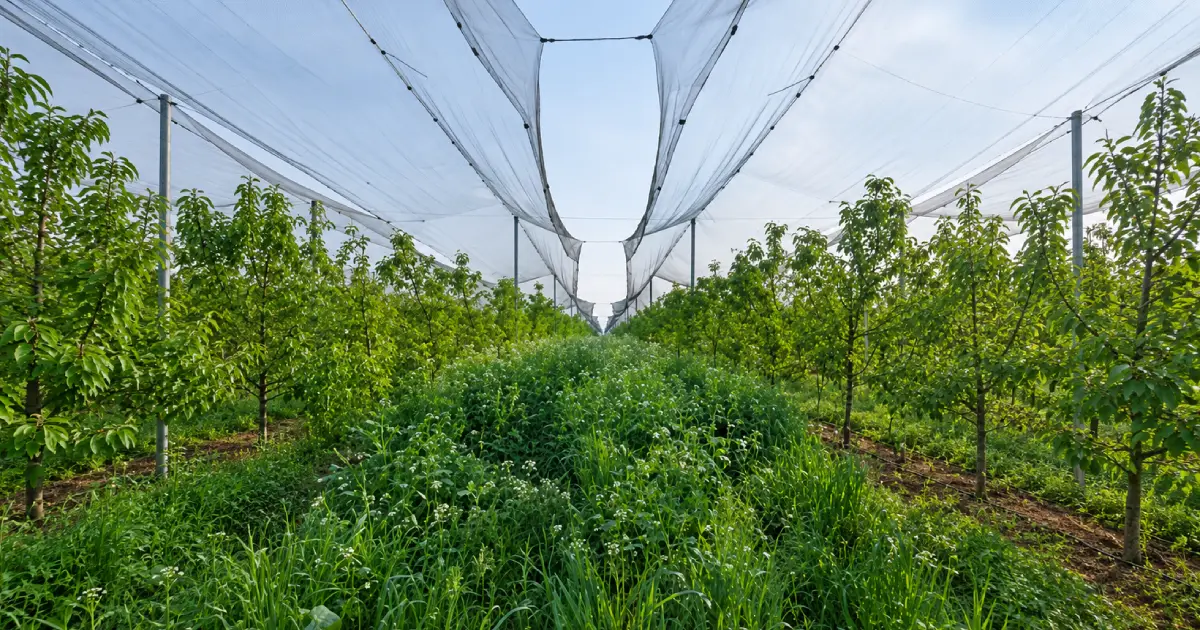
Fruit and vegetable Pilot Demo Farms in Italy’s Po Valley are testing green manure as a measure to improve soil health and biodiversity. Green manure is categorized as monospecific using only horseradish Armoracia
rusticana, bispecific cover cropping with horseradish and vetch Vicia sativa or horseradish and white mustard Sinapis alba, or polyspecific cover cropping. There are different herbaceous families used: Brassicaceae which are excellent for their nematocidal and biofumigant properties, in addition to the aeration provided by their taproot system, Legumes capable of ensuring nitrogen fixation, and Graminaceae with long, thin fibers that are also able to penetrate deep into the soil.
As for crop management, sowing takes place in the autumn and can be carried out using a seed drill or simply a fertiliser spreader in the case of multiple herbaceous species – and therefore different seeds – following soil preparation, or by direct sowing into the soil in the case of soils with a suitable texture. In spring, the crop is then mown, mulched and ploughed into the soil after a few days, generally once the various plant species have flowered or depending on the sowing requirements of the subsequent crop; whereas in the case of inter-row green manure in orchards, the timeframe may be extended.
The main benefits of this practice are:
- maintaining or increasing soil fertility as well as biodiversity, and reducing the use of chemical fertilizers thanks to the biomass and stored nutrients;
- improving soil structure, thanks to the addition of organic matter and the action of the root systems;
- controlling weeds through competition, reducing their access to nutrients and space to grow;
- protecting the soil f rom erosion caused by weather conditions;
- increasing the availability of nitrogen of biological origin, making it available for the next crop and reducing leaching, thereby preventing it from entering the groundwater.
Summary for Practicioners in Native Language
Nella pianura Padana, zona in cui sono localizzate le principali Pilot Demo Farm ortofrutticole italiane, si sta testando il sovescio come misura per migliorare la salute del suolo e biodiversità. Il sovescio viene distinto in monospecifico con il solo rafano Armoracia rusticana, bispecifico con rafano e veccia Vicia sativa o rafano e senape bianca Sinapis alba o polispecifico. Le principali essenze erbacee provengo della famiglia delle brassicacee ottime per la funzione nematocida e biofumigante oltre alla capacità arieggiante data dall’apparato radicale a fittone, leguminose in grado di garantire l’azoto fissazione e graminacee con fibra lunga e sottile e anch’esse in grado di esplorare il suolo in profondità.
Per quanto riguarda la gestione colturale la semina avviene nel periodo autunnale e può essere effettuata con seminatrice o semplicemente con uno spandiconcime nel caso di più specie erbacee, e quindi differenti semi, previa preparazione del terreno o con semina diretta su sodo nel caso di terreni con tessitura del suolo adatta. Nel periodo primaverile la coltura viene poi sfalciata, trinciata e interrata dopo qualche giorno, in genere al raggiungimento della fioritura delle varie essenze o in base alle necessità di semina della coltura successiva, mentre nel caso di sovesci interfilari nel frutteto le tempistiche possono essere allungate.
I principali benefici di questa pratica sono:
- mantenere o aumentare la fertilità del suolo e anche la biodiversità e ridurre le concimazioni chimiche grazie alla biomassa e ai nutrienti immagazzinati;
- migliorare la struttura del terreno, grazie all’apporto di sostanza organica e all’azione degli apparati radicali;
- controllare le infestanti attraverso la competizione, riducendo la loro disponibilità di nutrienti e di spazi per svilupparsi;
- proteggere il suolo dall’erosione dovuta dagli agenti atmosferici;
- aumentare la disponibilità di azoto di origine biologica rendendolo disponibile per la coltura successiva e ridurre la lisciviazione, evitando che finisca in falda.
Additional Information
Based on our experience, one of the most important factors to consider when carrying out green manuring is timing: it is necessary to assess the right time for sowing without delaying it too much, so as to allow the various herbaceous species that make up the green manure to develop fully, and to assess the timing of mowing and incorporation just as carefully. Other factors to consider include soil texture, soil moisture, seasonal weather patterns and the requirements of the subsequent crop to be planted. To achieve a longer-term effect on the soil health, these
practices must be repeated over several growing seasons, eventually becoming standard practice leading to savings in fertiliser use.