



Contact/s:

Pim Heeman

p.heeman@zlto.nl

Sam Wisse

s.wisse@zlto.nl

Building Soil Carbon and Organic Matter: A Practical Tool to Evaluate Farm-Specific Management Scenarios

Europe

All countries and climatic zones in Europe. However, the tool and default values are in Dutch context

Benefits of the Practice

1. Soil health
2. Climate mitigation
3. Water adaptation

Thematic Areas

Soil Health

Production System/s

Land-based sectors

Summary for Practicioners on the Main Finding(s)/Innovative solution(s)

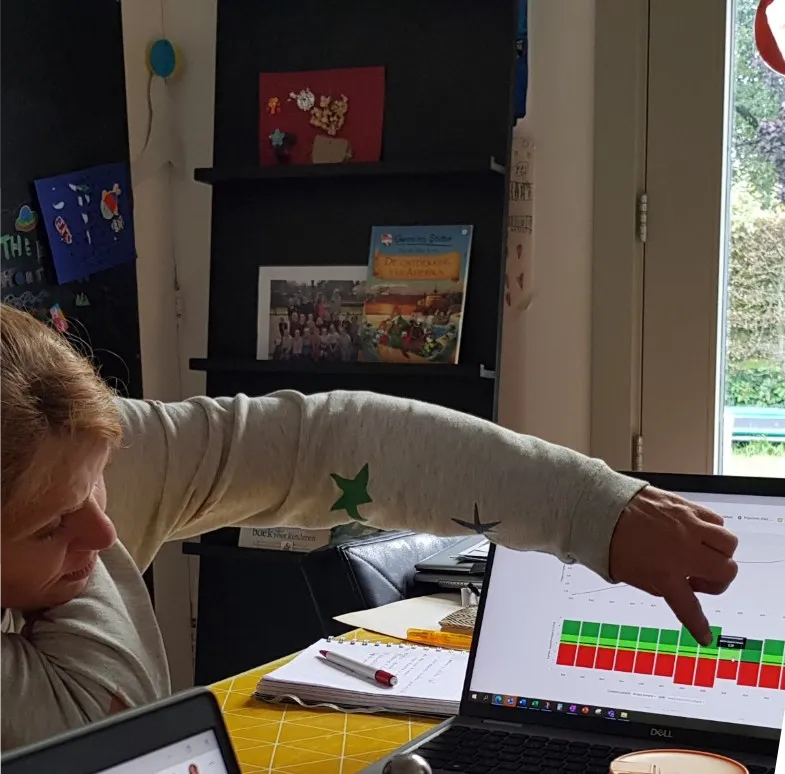
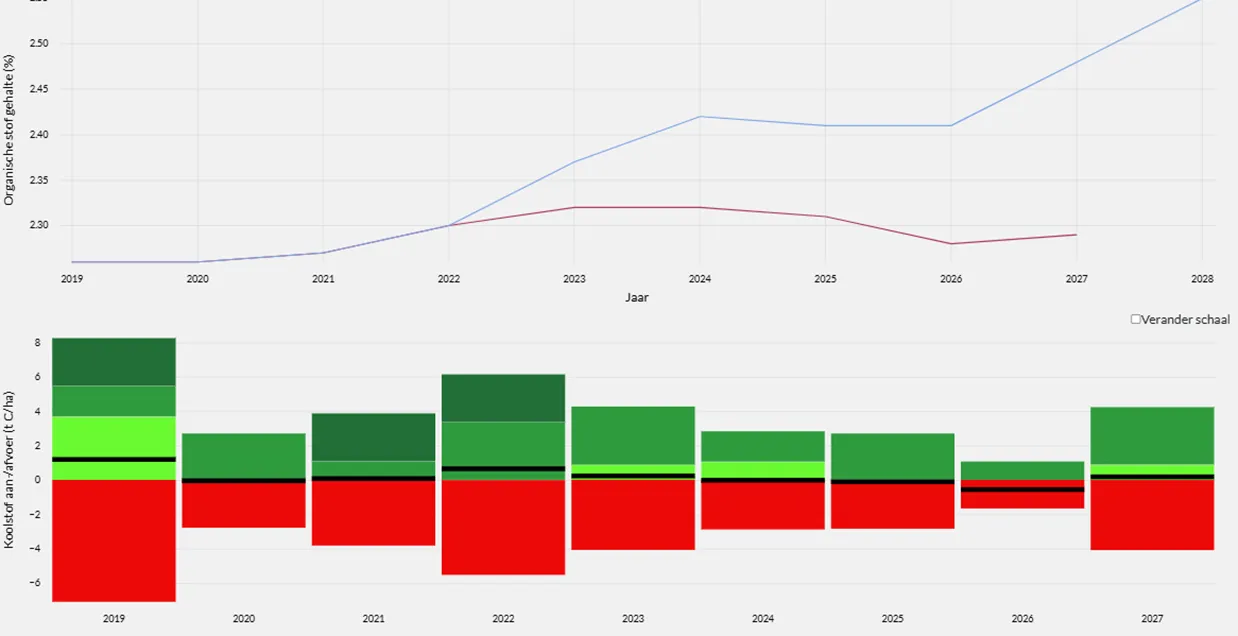
The Soil Carbon Tool is a practical calculation tool for arable farmers and livestock farmers with land-based production systems. The tool provides farmers with insight into the development of soil organic matter levels and carbon sequestration on their fields. Calculations are based on existing farm

data, such as crops, cover crops, organic manure, compost, and crop residues. Data can be entered manually or imported from existing systems.

The strength of the tool lies in its ability to compare different scenarios. Farmers can evaluate their current situation against alternatives, such as introducing additional cover crops, increasing organic manure applications, incorporating crop residues into the soil, or adjusting crop rotations. This makes it possible to identify which measures contribute most effectively to building soil organic matter and storing carbon.

The benefits for farmers extend well beyond climate gains alone. Soils with higher organic matter content often have a better structure, more active soil life, and greater water-holding capacity. As a result, they are more resilient to both drought and heavy rainfall. Healthy soils can also contribute to improved yields and more efficient nutrient use.

In addition, the tool supports decision-making at farm level. Rather than relying on general recommendations, farmers can assess the impact of specific measures on their own farms. The Soil Carbon Tool may also create opportunities for future revenue models related to carbon sequestration. Its calculations provide insight into a farm’s potential CO₂ sequestration and can serve as a basis for participation in carbon farming initiatives or other incentive schemes.

The tool is being developed by Wageningen University & Research (WUR), with farmer organisations actively contributing to its further development to ensure that it remains practical, user-friendly, and easy to apply for both farmers and advisors.

Summary for Practicioners in Native Language

De BodemCoolstofTool is een praktische rekentool voor akkerbouwers en grondgebonden veehouders. Met de tool krijgen boeren inzicht in de ontwikkeling van het organische-stofgehalte en de koolstofvastlegging op hun percelen. De berekeningen zijn gebaseerd op bestaande bedrijfsgegevens, zoals gewassen, groenbemesters, organische mest, compost en gewasresten. Gegevens kunnen handmatig worden ingevoerd of worden ingeladen vanuit bestaande systemen.

De kracht van de tool zit in het doorrekenen van verschillende scenario’s. Boeren kunnen de huidige situatie vergelijken met alternatieven, zoals het inzetten van extra groenbemesters, het verhogen van de aanvoer van organische mest, het onderwerken van gewasresten of het aanpassen van het bouwplan. Hierdoor wordt zichtbaar welke maatregelen het meeste bijdragen aan de opbouw van organische stof en koolstof in de bodem.

De opbrengst voor boeren gaat verder dan alleen klimaatwinst. Een bodem met meer organische stof heeft vaak een betere structuur, actiever bodemleven en een groter watervasthoudend vermogen . Daardoor wordt de bodem weerbaarder tegen droogte en neerslag. Ook kan een gezonde bodem bijdragen aan een betere opbrengst en een efficiënter nutriëntengebruik.

Daarnaast helpt de tool bij het maken van keuzes in de bedrijfsvoering. In plaats van algemene adviezen te volgen, kan een boer zien wat een maatregel op zijn eigen bedrijf betekent. De BodemCoolstofTool kan ook kansen bieden voor toekomstige verdienmodellen rond koolstofvastlegging. De berekeningen geven inzicht in de potentiële CO₂-vastlegging van een bedrijf en kunnen dienen als basis voor deelname aan carbon farming-initiatieven of andere beloningssystemen. De tool wordt ontwikkeld door Wageningen University & Research, waarbij boerenorganisaties meedenken over de doorontwikkeling zodat deze goed aansluit bij de praktijk en eenvoudig toepasbaar is voor boeren en adviseurs.

Additional Information

Below you can find some basic information on carbon farming obtained from our previous PA#21. Benefits of Carbon Sequestration: Improvement of Soil Health: Carbon sequestration enhances soil health by improving soil structure, water retention, and nutrient availability. Reduction of Carbon Footprint: By sequestering carbon, the agricultural sector can contribute to the reduction of overall CO2 emissions. Financial Benefits: Farmers can financially benefit from carbon sequestration by participating in carbon farming projects and selling carbon credits. Support for Sustainable Agricultural Practices: Carbon sequestration promotes the use of sustainable agricultural practices such as cover crops, compost, and organic fertilizers. Factors Affecting Carbon Sequestration: The effectiveness of carbon sequestration in the soil depends on factors such as moisture availability, temperature, clay content, soil structure, pH, and soil life. Clay soils generally have a higher carbon sequestration capacity than sandy soils. Effective Measures for Carbon Sequestration: To increase the amount of organic matter in the soil, there are two options: ● Increase Organic Matter Input: For example, by using cover crops, compost, and solid manure. ● Reduce Organic Matter Decomposition: For example, by leaving crop residues on the land.

Additional Dissemination and Communication Materal(s)

Guide Soil Carbon Tool

Photos

Get in Touch

Pim Heeman
p.heeman@zlto.nl
Sam Wisse
s.wisse@zlto.nl