



Contact/s:
Justyna Fila
j.fila@cdr.gov.pl
How to Keep Nitrogen in Slurry by Acidification?

Europe
All zones
1. Reducing ammonia emissions from slurry
2. Improving animal welfare
3. Reducing odors
Thematic Areas
Production System/s
Summary for Practicioners on the Main Finding(s)/Innovative solution(s)
High pH of slurry is the main reason for very rapid evaporation of ammonia during its application to the field. During storage of slurry in tanks, significant nitrogen losses also occur. These losses can be reduced by covering tanks, cooling the slurry to slow down the processes occurring in it, or acidifying it.
Currently, in Denmark 20% of slurry is acidified. There are only a few pilot plants outside Denmark. Interest in this technique is growing in other countries, and the current BAT (Best Available Techniques) document indicates slurry acidification as a mandatory best available technique in all EU countries. Within the Climate Farm Demo project, we want to achieve a significant reduction in GHG emissions during the project by promoting climate mitigation practices. Animal production is responsible for significant GHG emissions, and it is important to promote practices that reduce them.
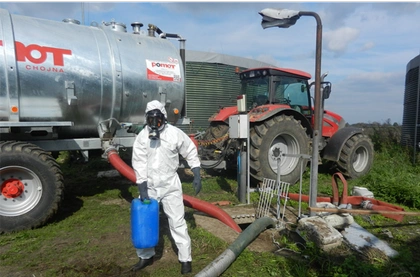
⦁ Practical implications/recommendations: There are 3 methods of slurry acidification: “in house”, “in field” and “in storage”. It is very important to follow safety rules in each system. Particular attention should be paid to personal protective equipment, such as eye protection goggles, a mask absorbing toxic fumes, acid-resistant gloves and shoes, and a hooded suit. The cost of purchasing sulphuric acid is low, around 15 EUR per litre, and it is easily available. Main cost is equipment. The first slurry acidification system appeared on the market in 1999 in Denmark and it was a system of acidification in house. Then around 2009 a system of acidification in the field was introduced. The last one on the market appeared a system of acidification of slurry in storage.
⦁ Target Audience: farmers
Summary for Practicioners in Native Language
⦁ Wysokie pH gnojowicy to główny powód bardzo szybkiego ulatniania się amoniaku w czasie jej aplikacji na polu. Podczas przechowywania gnojowicy w zbiornikach także dochodzi do znacznych strat azotu. Straty te można ograniczyć poprzez zadaszanie zbiorników, ochładzanie gnojowicy w celu spowolnienia procesów w niej zachodzących lub zakwaszanie.
⦁ Obecnie w Danii 20% gnojowicy jest zakwaszane. Poza granicami tego kraju istnieje tylko kilka pilotażowych instalacji. Zainteresowanie tą techniką ze strony innych krajów rośnie, a obecny dokument BAT (Best Available Techniques) wskazuje zakwaszanie gnojowicy jako najlepszą dostępną technikę obowiązkową we wszystkich krajach UE.
W ramach projektu Climate Farm Demo chcemy osiągnąć 30% redukcji emisji gazów cieplarnianych w trakcie trwania projektu poprzez upowszechnianie praktyk łagodzących zmiany klimatu. Produkcja zwierzęca jest odpowiedzialna za znaczne emisje gazów cieplarnianych dlatego ważne jest aby promować praktyki, które wpływają na ich obniżenie.
⦁ Praktyczne rekomendacje: Istnieją 3 metody zakwaszania “w budynku”, “na polu” i “w zbiorniku”. Bardzo ważne w każdym systemie jest zachowanie zasad bezpieczeństwa. Szczególnie należy zwrócić uwagę na środki ochrony osobistej tj. gogle do ochrony oczu, maskę pochłaniającą toksyczne opary, rękawice i buty kwasoodporne oraz kombinezon z kapturem. Koszt zakupu kwasu siarkowego jest niski ok 60 zł za litr i jest on łatwo dostępny. Pierwszy system zakwaszania gnojowicy pojawił się na rynku w 1999 roku i był to system zakwaszania w budynku. Następnie wprowadzono ok. 2009 roku system zakwaszania na polu. Ostatni na rynku pojawił się system zakwaszania gnojowicy w zbiorniku jako prostszy i tańszy od systemu zakwaszania gnojowicy na polu.
⦁ Grupa docelowa: rolnicy
Additional Information
The high pH of slurry is the primary reason for the rapid evaporation of ammonia during field application. Significant nitrogen losses also occur during slurry storage in tanks. In Denmark, slurry acidification has been practiced for over 20 years. The process uses concentrated 96% sulfuric acid, which is highly toxic and irritating. Therefore, appropriate personal protective equipment (PPE) is essential, including protective goggles, a mask for toxic fumes, acid-resistant gloves and footwear, and a hooded suit.
There are three main methods of slurry acidification:
1. In-House Acidification
This system includes a main slurry tank, a process tank with a mixer, a sulfuric acid tank, and a computer-controlled unit. Slurry is pumped from channels in the livestock building to the process tank. Sulfuric acid is added and mixed until the slurry reaches a pH of 5.5. A flow sensor ensures the slurry circulates back into the building until the desired pH is maintained. To stabilize pH, this process is repeated daily.
2. In-Tank Acidification
This method uses a tractor-mounted system comprising a mixer with an acid dosing nozzle, a slurry pump, a piping system with a nonreturn valve, and an acid dosing pump. The sulfuric acid is stored in a container beside the slurry tank and added directly into the stored slurry. Since acidification generates foam, the slurry tank should be filled to no more than two-thirds capacity. If excessive foam forms, pause acid addition until it subsides.
3. In-Field Acidification
Considered the safest method for handling sulfuric acid, this system consists of a slurry tanker with a pump and trailing hoses, a pH meter, and a tractor. Acid is dosed using a stainless steel pump with electronic control. The system measures the initial pH of the slurry and adjusts it to the target pH entered in the computer. A pH sensor placed near the distribution boom ensures accurate application. To prevent clogging from foam, acid and slurry are mixed quickly, andthe acid is injected as close to the distributor as possible.
Benefits of Slurry Acidification
Decades of Danish experience confirm multiple benefits of acidifying slurry:
• Ammonia emission reduction by up to 40%
• Sulfur supplementation to the soil
• Improved animal health, particularly with in-house systems
• Higher crop yields
• Minimal odor during field application
• Increased carbon sequestration, according to long-term SEGES studies
Additionally, sulfuric acid is widely available and relatively inexpensive, costing around €15 per liter.