



Contact/s:
Vasilis Psiroukis
vpsiroukis@aua.gr
Optimisation of Irrigation in Olive Cultivation Using Sensors, Drip Irrigation and Monitoring of Climatic Conditions

Greece
Mediterranean
- Irrigation optimisation to reduce water loss
- Increasing production even in periods of severe drought
Thematic Areas
Production System/s
Summary for Practicioners on the Main Finding(s)/Innovative solution(s)
Optimising irrigation in olive groves is critical for increasing efficiency and ensuring sustainability, especially in regions with limited water resources. Proper irrigation management reduces water waste and supports higher olive yields.
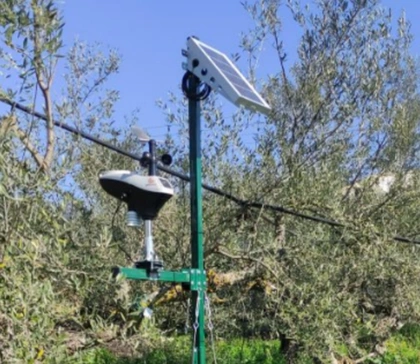
Meteorological stations are essential tools for efficient irrigation, providing real-time data on temperature, humidity, wind, and rainfall. These parameters help estimate water evaporation from soil and plants (EVP). In hot, dry conditions, EVP rises, and irrigation needs increase, while rain or high humidity reduce water demand. Forecasting rain also helps avoid unnecessary irrigation, improving water use efficiency.
This climate data supports informed decisions tailored to the olive grove’s real needs. Modern technologies further enhance optimisation. Soil moisture sensors, for example, monitor water needs in real time, enabling precise irrigation planning and avoiding over- or under-watering.
Drip irrigation systems, which deliver water directly to the plant roots in controlled amounts, are highly efficient, minimizing evaporation and runoff. Advanced systems combining moisture sensors with weather forecasts allow automated adjustments, maximising water efficiency.
Integrating data from soil monitoring, moisture levels, and climate conditions enables significant water savings while maintaining soil quality and tree health.
Although initial investments are required, the long-term benefits are substantial. Optimised irrigation increases productivity, reduces costs, and supports sustainable resource management, helping ensure the economic viability of olive groves.
Summary for Practicioners in Native Language
Η βελτιστοποίηση της άρδευσης σε ελαιώνες αποτελεί κρίσιμο παράγοντα για την αύξηση της αποδοτικότητας και τη διασφάλιση της βιωσιμότητας των καλλιεργειών, ειδικά σε περιοχές με περιορισμένους υδάτινους πόρους. Η σωστή διαχείριση της άρδευσης μειώνει τη σπατάλη νερού, ενώ παράλληλα διασφαλίζει τη μέγιστη απόδοση της παραγωγής ελιάς.
Οι μετεωρολογικοί σταθμοί αποτελούν σημαντικό εργαλείο για την αποδοτική διαχείριση της άρδευσης στους ελαιώνες, καθώς παρέχουν ακριβή και έγκαιρη πληροφόρηση για τις καιρικές συνθήκες που επηρεάζουν την ανάγκη των φυτών για νερό. Μέσω της παρακολούθησης παραμέτρων όπως η θερμοκρασία, η υγρασία, η ταχύτητα του ανέμου, οι βροχοπτώσεις και άλλες κλιματικές συνθήκες, οι μετεωρολογικοί σταθμοί επιτρέπουν την ακριβή εκτίμηση των αναγκών άρδευσης σε πραγματικό χρόνο.
Για παράδειγμα, οι μετεωρολογικοί σταθμοί βοηθούν στην εκτίμηση της εξάτμισης του νερού από το έδαφος και τα φυτά (ΕΒP), η οποία εξαρτάται από τη θερμοκρασία και την υγρασία του αέρα. Όταν οι συνθήκες είναι ξηρές και ζεστές, η εξάτμιση αυξάνεται και απαιτείται μεγαλύτερη άρδευση, ενώ όταν οι καιρικές συνθήκες είναι υγρές ή έχει προηγηθεί βροχή, η ανάγκη για άρδευση μειώνεται.
Επιπλέον, οι μετεωρολογικοί σταθμοί συμβάλλουν στην πρόβλεψη επικείμενων βροχοπτώσεων, επιτρέποντας στους αγρότες να προγραμματίσουν την άρδευση ανάλογα, αποφεύγοντας την άσκοπη σπατάλη νερού. Εάν αναμένονται βροχές, οι αγρότες μπορούν να αναβάλουν ή να μειώσουν την άρδευση, βελτιώνοντας τη διαχείριση των υδάτινων πόρων.
Αυτός ο συνδυασμός δεδομένων και τεχνολογίας διευκολύνει τη λήψη αποφάσεων με βάση τις πραγματικές ανάγκες του ελαιώνα και τις καιρικές συνθήκες.
Οι σύγχρονες τεχνολογίες αποτελούν τον πυρήνα αυτής της βελτιστοποίησης. Η χρήση αισθητήρων υγρασίας στο έδαφος, για παράδειγμα, επιτρέπει την ακριβή παρακολούθηση της ανάγκης του φυτού για νερό σε πραγματικό χρόνο. Αυτοί οι αισθητήρες παρέχουν δεδομένα που επιτρέπουν στον αγρότη να προγραμματίσει την άρδευση με βάση τις πραγματικές ανάγκες της καλλιέργειας, μειώνοντας την υπερβολική ή ανεπαρκή άρδευση.
Η μέθοδος άρδευσης στάγδην είναι επίσης μια από τις πιο αποδοτικές για ελαιώνες, καθώς προσφέρει νερό απευθείας στη ρίζα του φυτού με ελεγχόμενη ποσότητα, μειώνοντας τις απώλειες λόγω εξάτμισης και απορροής. Επίσης, η εφαρμογή συστημάτων άρδευσης που συνδυάζουν αυτόματα συστήματα με κλιματικές προβλέψεις μπορεί να προσαρμόσει την άρδευση με βάση τις καιρικές συνθήκες, εξασφαλίζοντας τη μέγιστη δυνατή αποδοτικότητα.
Αξιοποιώντας τα δεδομένα από την παρακολούθηση του εδάφους, την υγρασία και τις καιρικές συνθήκες, οι αγρότες μπορούν να εξοικονομήσουν σημαντικά ποσά από τη χρήση νερού, ενώ ταυτόχρονα προστατεύουν την ποιότητα του εδάφους και την υγεία των δέντρων.
Η εφαρμογή αυτών των τεχνολογιών απαιτεί αρχικά μια επένδυση, αλλά τα μακροπρόθεσμα οφέλη είναι σημαντικά. Η βελτιστοποίηση της άρδευσης μπορεί να αυξήσει την παραγωγή, να μειώσει το κόστος και να συμβάλλει στην αειφόρο διαχείριση των φυσικών πόρων, εξασφαλίζοντας την οικονομική βιωσιμότητα των ελαιώνων.
Additional Information
Optimising irrigation in olive groves is a critical factor for increasing efficiency and ensuring the sustainability of crops, especially in areas with limited water resources. Proper irrigation management reduces water wastage while ensuring maximum yield of olive production.
Meteorological stations are an important tool for the efficient management of irrigation in olive groves, as they provide accurate and timely information on weather conditions that affect the plants’ need for water. By monitoring parameters such as temperature, humidity, wind speed, precipitation and other climatic conditions, weather stations allow accurate estimation of irrigation needs in real time.
For example, weather stations help to estimate the evaporation of water from soil and plants (EVP), which depends on air temperature and humidity.
When conditions are dry and hot, evaporation increases and more irrigation is required, while when the weather is wet or preceded by rain, the need for irrigation is reduced.
In addition, weather stations help to predict upcoming rainfall, allowing farmers to plan irrigation, accordingly, avoiding unnecessary waste of water.
If rain is expected, farmers can postpone or reduce irrigation, improving water management.
This combination of data and technology makes it easier to make decisions based on actual olive grove needs and weather conditions
Modern technologies are at the core of this optimisation. The use of moisture sensors in the soil, for example, allows the precise monitoring of the plant’s need for water in real time. These sensors provide data that allow the farmer to plan irrigation based on the actual needs of the crop, reducing over- or under-irrigation.
Drip irrigation is also one of the most efficient methods for olive groves, as it delivers water directly to the root of the plant in a controlled amount, reducing losses due to evaporation and runoff. Also, the implementation of irrigation systems that combine automatic systems with climate forecast scan adjust irrigation based on weather conditions, ensuring maximum efficiency.
By utilizing data from soil monitoring, moisture and weather conditions, farmers can save significant amounts of water while protecting soil quality and tree health.
Implementing these technologies requires an initial investment, but the long-term benefits are significant. Optimizing irrigation can increase production, reduce costs and contribute to sustainable management of natural resources, ensuring the economic viability of olive groves