



Contact/s:
Ángel Malumbres
amalumbres@intiasa.es
Nest Boxes for Vole Control in Agricultural Crops

Spain
Mediterranean
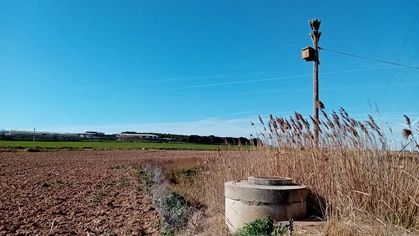
- Natural pest control through nest boxes for Barn Owls and Kestrels
- Medium- and long-term effectiveness in reducing vole populations
- Cost-effective and eco-friendly alternative to chemical rodenticides
Thematic Areas
Production System/s
Summary for Practicioners on the Main Finding(s)/Innovative solution(s)
Rodents are one of the pests with the greatest economic impact on agriculture worldwide, and the Iberian Peninsula is no exception. The rodent species that has unleashed the greatest conflict has been the vole (Microtus arvalis), although there are several species causing agricultural losses. It can affect practically any crop without exception. In our region (Navarra) the vole has increased both in abundance and distribution.
The use of plastic in horticultural crops and the direct sowing of extensive crops have favoured the increase of this species. Voles also increase their numbers in either permanent and multi-year crops, such as alfalfa, and where no-tillage techniques are used. In addition, the modernisation of agricultural and livestock infrastructures has limited the nesting areas for birds that prey on these rodents.
In order to deal with this problem, the burning of stubble and boundaries and the use of rodenticides have traditionally been used. Those are measures with a very high environmental impact and a highly questionable effectiveness.
Artificial nest boxes for predators (kestrels, owls) prevent the overgrowth of vole populations and minimise crop damage. Hedges also have a positive effect.
The nest boxes are placed at a minimum height of 3 metres in buildings such as restored farmyards or agricultural warehouses. In the case of the kestrel they can also be placed on poles. As the breeding area of a pair of barn owls or kestrels is around 30 ha, these boxes should be placed at least 300 m apart to optimise their effectiveness.
This strategy aims to control these rodents in the most effective way in the medium and long term and also has the advantage of being economically and environmentally more sustainable than the usual application of pesticides.
Summary for Practicioners in Native Language
Los roedores son una de las plagas con mayor repercusión económica en la agricultura de todo el mundo y la Península Ibérica no es una excepción. La especie de roedor que mayor conflicto ha desatado ha sido el Topillo Campesino (Microtus arvalis), aunque se encuentran varias especies que causan daños agrícolas. Puede afectar prácticamente a cualquier cultivo sin excepción. En nuestra región (Navarra) el topillo campesino ha aumentado tanto en abundancia como en distribución.
El uso de plástico en los cultivos hortícolas y la siembra directa de cultivos extensivos han favorecido el incremento de esta especie. Los topillos aumentan sus poblaciones en cultivos permanentes y/o plurianuales, como es el caso de la alfalfa entre otros y en parcelas donde se realizan técnicas de lo laboreo. Además, la modernización de las infraestructuras agrícolas y ganaderas ha limitado los espacios de anidación de aves depredadoras de estos roedores.
Con el fin de hacerle frente, tradicionalmente se ha recurrido a la quema de rastrojos y linderos y al uso de rodenticidas. Medidas con un impacto medioambiental muy elevado y una eficacia muy cuestionada.
La colocación de nidales artificiales para depredadores (cernícalos, lechuzas) evitan el crecimiento excesivo de las poblaciones de topillos minimizando los daños en los cultivos. El mantenimiento de setos también tiene implicaciones positivas.
Los nidales se colocan a una altura mínima de 3 metros en edificios tales como corrales restaurados o almacenes agrícolas. En el caso del cernícalo se pueden colocar también en postes. Dado que el área de campeo de una pareja de lechuzas o cernícalos está en torno a las 30 ha, estas cajas deben colocarse separadas un mínimo de 300 m para optimizar la eficacia de las mismas.
Esta estrategia persigue el control de estos roedores de la manera más eficaz a medio y largo plazo, teniendo además la ventaja de ser económica y ambientalmente más sostenible que la habitual aplicación de fitosanitarios.