



Contact/s:

Déri Hanna

hanna.deri@biokutatas.hu

Berényi Üveges Judit

judit.berenyi.uveges@biokutatas.hu

Soil Moisture Conserving Practices: Climate Change Challenges in the Danube–Tisza Interfluve

Hungary, Continental/Pannonian

Benefits of the Practice

1. Moisture conservation
2. Improving the biodiversity of soil
3. Improving soil structure

Thematic Areas

Soil Health & Biodiversity, Crops Management

Production System/s

Arable crop management

Summary for Practicioners on the Main Finding(s)/Innovative solution(s)

The Hungarian Living Lab within Climate Farm Demo project, in a drought-prone sandy-soil region, has spent four years testing soil and crop-management practices to improve drought resilience and preserve soil moisture, including cover cropping, intercropping, reduced tillage including no-till, and undersowing. In the undersowing experiments, rye, winter oat, and emmer were combined with either sweet clover or hairy vetch, but the legumes either failed to germinate or dried out after emergence in dry springs.

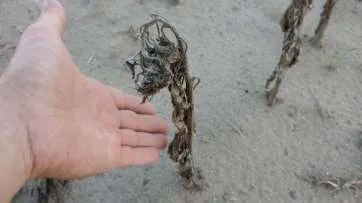
Many of the organic farms in the region still use ploughing. In our experiments, we avoided ploughing and tested alternatives instead. For cereals, disc or grubber cultivation worked well as an alternative to ploughing, creating suitable seedbed conditions and yields comparable to ploughing. For sunflowers, one LL member farm’s available machinery could not achieve the seedbed quality needed for reliable germination and emergence without ploughing. A further, unexpected finding came last year on another farm: under extreme drought, a minimum-tillage (noninversion tillage with maximum depth 10 cm) plot produced higher rye yield than a no-till plot (1.1 and 0.58 t/ha respectively). This result has occurred only once so far and needs further investigation.

Over these four years, drought in our region has grown increasingly severe due to climate change. Based on our results so far, our experience suggests that under increasingly severe drought, agronomic measures alone may not be sufficient and may need to be complemented by further adaptations in crop, land use and soil management, as well as changes in water management strategies tailored to preserving water in the landscape and soil.

Notably, no-till, undersowing and cover cropping should not be assumed to perform consistently across all drought conditions; suitability should be assessed through local testing, adapting tillage intensity and timing to soil moisture, crop, and field conditions.

Summary for Practicioners in Native Language

A térséget, ahol az Élő Laboratórium működik, súlyosan érinti a klímaváltozás, különösen az aszályok növekvő gyakorisága és intenzitása. Az Élő Laboratórium négy évvel ezelőtti indulása óta olyan gazdálkodási technikák fejlesztésére összpontosítottunk, amelyek hozzájárulnak az aszály hatásainak mérsékléséhez és a talajnedvesség megőrzéséhez.

Additional Information

The Living Lab aims to address climate change–related challenges in the Danube–Tisza Interfluve. This sandy region is characterized by frequent droughts, water scarcity, and unstable crop yields; declining soil organic matter content, which reduces ecosystem resilience; sandy and sandy loam soils with low colloid content, limiting soil structure development and soil biodiversity; and high summer soil temperatures that impose additional stress on crops and soil ecosystems.

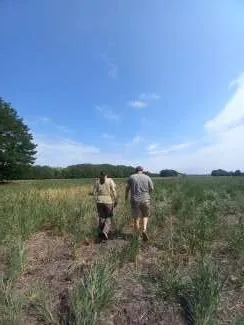
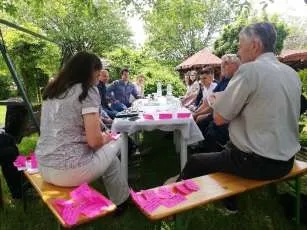
These conditions call for a climate-adaptive, regenerative agriculture approach based on site-specific solutions. We conduct on-farm research and practical field experiments, including field trials, soil sampling, farmer consultations, and systematic collection of experiences and feedback to co-develop soil-improving, herbicide-free reduced-tillage practices together with farmers, advisors, and machinery providers. Through workshops and stakeholder events, we facilitate knowledge exchange and the sharing of lessons learned, allowing us to identify challenges, refine our methods, and adapt our approach to local conditions.

Our on-farm experiments provide valuable insights to support farmers in shaping adaptation strategies. However, the results are not yet mature enough to formulate recommendations for broader application across the region.

Additional Dissemination and Communication Materal(s)

A regeneratív talajművelés lehetőségei az ökológiai gazdálkodásban – Gyakorlati útmutató

Climate Farm Demo Living Labs

Photos

Get in Touch

Déri Hanna
hanna.deri@biokutatas.hu
Berényi Üveges Judit
judit.berenyi.uveges@biokutatas.hu