



Contact/s:
Jana Bolduan
jana.bolduan@gruenlandzentrum.de
Use of Biochar in German Farms - Benefits for Climate, Soil and Animal Health

Germany
Warm-temperate Mid-latitude
- GHG Reduction & Carbon Storage: CO₂ sequestration in soil, biochar as a carbon sink.
- Soil Fertility Enhancement: Improved structure, aeration, water retention, nutrient availability, higher yields.
- Animal Health Optimization: Feed and bedding additive benefits—reduces toxins, enhances hygiene, supports hoof health.
Thematic Areas
Production System/s
Summary for Practicioners on the Main Finding(s)/Innovative solution(s)
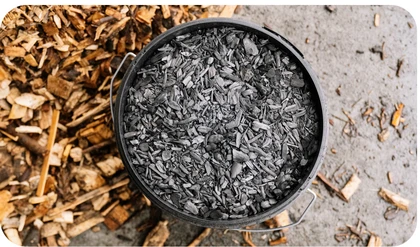
Biochar is a porous, carbon-rich material that is produced when plant biomass is heated at very high temperatures in the absence of air (pyrolysis). During this process, a large proportion of the carbon that was originally bound in the plants is not released into the atmosphere as CO₂ but remains stably bound in the biochar for many years. In this way, it can actively contribute to climate protection and optimize the carbon footprint of agricultural farms.
Soil fertility plays a decisive role in yield stability. Biochar can make a positive contribution to this by promoting water retention and optimizing soil aeration. In addition, biochar can bind nutrients and so contribute to higher nutrient availability. This can reduce the leaching of nutrients and lower the need for synthetic fertilizers. One practical way of applying biochar is to use it as a manure additive.
One advantage of using biochar in cattle farming is the optimization of animal health. Biochar can be used as a feed additive to support the animals’ digestive tract. It binds toxins, harmful substances and gases in the gastrointestinal tract. This can prevent illness and promote the general health of the animals. Biochar can also be used as bedding, e.g. in dairy farming. Due to the ability of biochar to absorb moisture and dirt, the lying surfaces remain drier. This can inhibit the growth of bacteria and other pathogens and thus reduce the risk of infections or skin problems. In addition, dry and clean bedding helps to prevent claw diseases.
Overall, special attention should be paid to the origin, production and quality of biochar so that the benefits described can unfold.
Summary for Practicioners in Native Language
Pflanzenkohle ist ein poröses, kohlenstoffreiches Material, welches entsteht, wenn pflanzliche Biomasse unter Luftabschluss bei sehr hohen Temperaturen erhitzt wird (Pyrolyse). Während dieses Prozesses wird ein großer Teil des Kohlenstoffs, der ursprünglich in den Pflanzen gebunden war, nicht in die Atmosphäre als CO₂ freigesetzt, sondern bleibt in der Pflanzenkohle viele Jahre stabil gebunden. So kann sie aktiv zum Klimaschutz beitragen und die Klimabilanz von landwirtschaftlichen Betrieben optimieren.
Die Bodenfruchtbarkeit spielt für die Ertragsstabilität eine entscheidende Rolle. Pflanzenkohle kann hierzu positiv beitragen, indem sie die Wasserspeicherung fördert sowie die Bodenbelüftung optimiert. Außerdem kann Pflanzenkohle Nährstoffe an sich binden und so zu einer höheren Nährstoffverfügbarkeit beitragen. Dies kann die Auswaschung von Nährstoffen verringern und den Bedarf an synthetischen Düngemitteln reduzieren. Eine praxistaugliche Möglichkeit zur Ausbringung von Pflanzenkohle ist die Nutzung als Güllezusatz.
Ein weiterer Vorteil des Einsatzes von Pflanzenkohle ist die Optimierung der Nutztiergesundheit. Pflanzenkohle kann als Futtermittelzusatz verwendet werden, um den Verdauungstrakt der Tiere zu unterstützen. Sie bindet Toxine, Schadstoffe und überschüssige Gase im Magen-Darm-Trakt. Dies kann Erkrankungen vorbeugen und die allgemeine Gesundheit der Tiere fördern. Pflanzenkohle kann auch als Einstreu z.B. in der Milchviehhaltung verwendet werden. Durch ihre Fähigkeit, Feuchtigkeit und Schmutz zu absorbieren, bleiben die Liegeflächen so trockener. Dies kann das Wachstum von Bakterien und anderen Krankheitserregern hemmen und somit das Risiko von Infektionen oder Hautproblemen verringern. Zudem trägt eine trockene und saubere Einstreu zur Vorbeugung von Klauenerkrankungen bei.
Insgesamt sollte ein besonderes Augenmerk auf die Herkunft, Herstellung sowie Qualität der Pflanzenkohle gelegt werden, damit sich die beschriebenen Vorteile entfalten können.