In the FarmDemo Trainingkit you can find many tools, guidelines and videos that can help you in organising a successful farm demonstration, also specifically about learning and facilitation methods. Below, we present eight interactive ways to stimulate exchange about climate smart farming.
Interactive Methods for Climate Smart Farming Demos
Which method fits your goal, group and situation?
| Learning goal | How | Expected outcome |
|---|---|---|
| Connect | Social or informal exchange For example: coffee tables, lunches, BBQs, tastings, ice-breaking exercises, or networking during fairs or farmers markets. | Strong relationships |
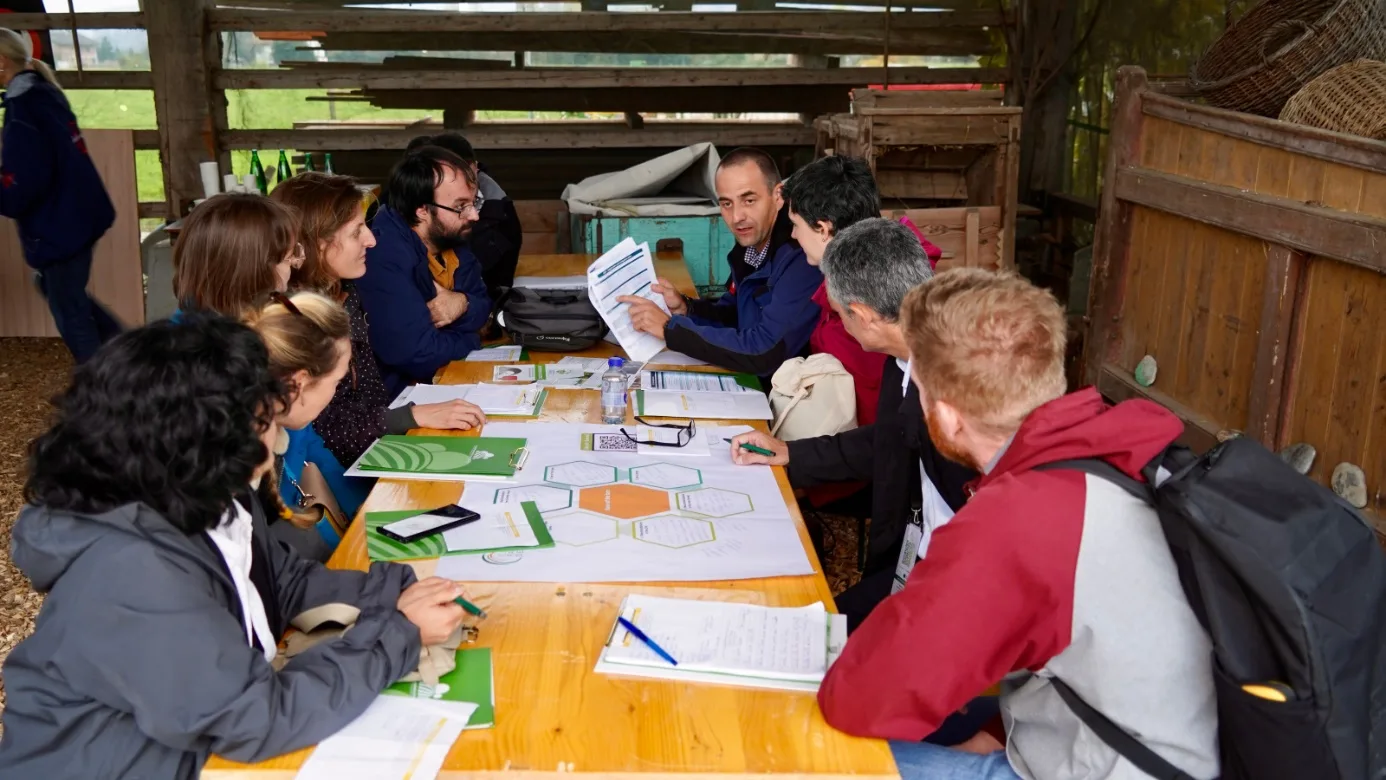
| Experiment | Serious games For example: quizzes, brainstorming, scenario-based planning, role-playing, ranking and scoring exercises, or children’s games at open days. Workshops For example: genetics, emission reduction or biological control; workshops can also combine climate smart co-designing or serious games. | Co-created insights |
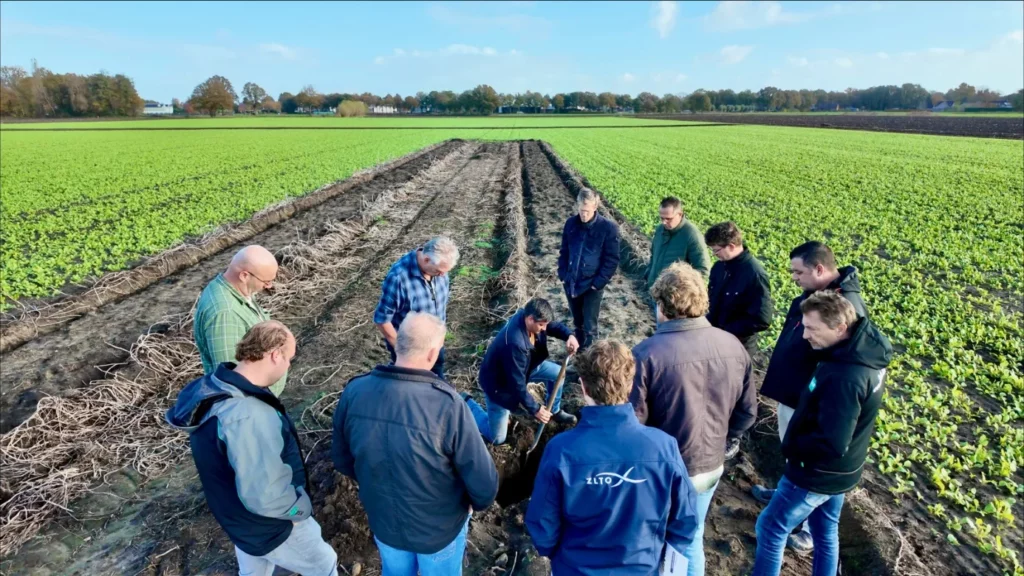
| Experience | Farm walks Walk-and-talk formats, guided tours, stop-and-talk sessions, or demonstrations at a soil pit, field or barn. Tours can focus on water buffering, catch crops, biogas plants or solar installations. Hands-on exercises For example: digging soil pits, assessing animals, tastings, using digital tools, machinery-in-action demonstrations, or soil and water testing. | Real-farm experience |
| Reflect | Small-group discussions For example: roundtables, breakout groups, or farmers presenting experiences and receiving feedback while moving between plots. Workshops For example: genetics, emission reduction or biological control; workshops can also include climate smart co-designing or serious games. | Co-created insights |
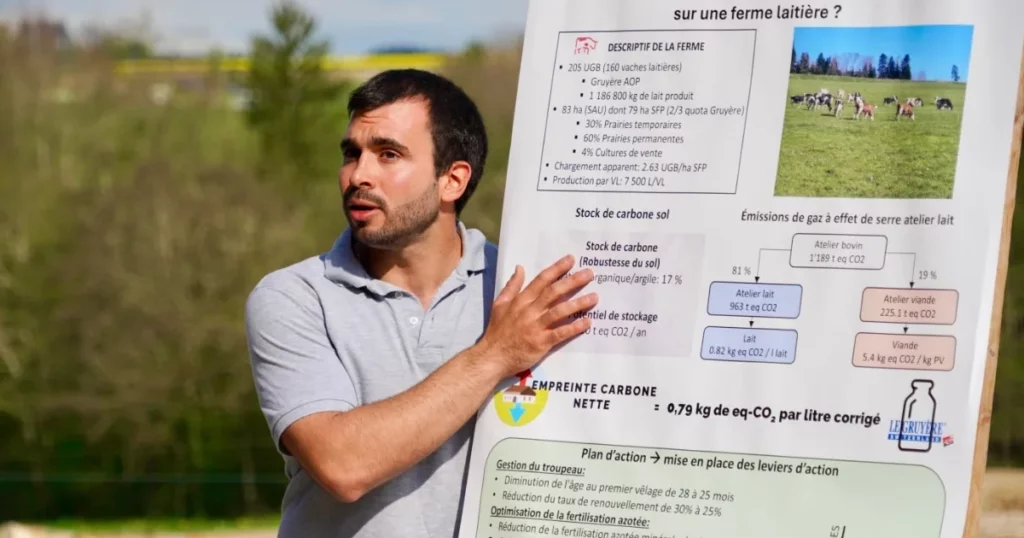
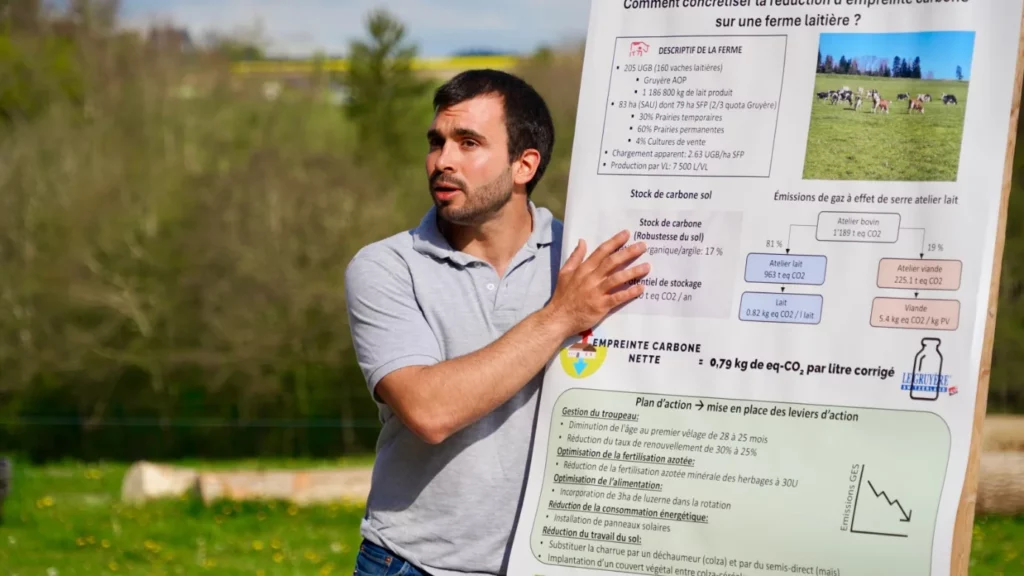
| Inform | Plenary discussion, Q&A For example: informal discussions, open questions, panels and roundtables with farmers, advisors, technicians and researchers. Showing visuals For example: comparison posters, climate information boards, graphs, maps, booklets or handouts with climate data. | Increased awareness |
Three Basic Rules When Selecting Interactive Methods
- Relate the learning content to climate smart farming practice.
- Engage participants in active knowledge exchange.
- Use a mix of learning methods.
Examples of Interactive Methods
Which Climate Measures Fit My Farm?
Siw Fasting (Germany) created a card game to discuss adaptation and mitigation measures with farmers. The three-step method enables practical and customised solutions for climate-friendly farming practices while fostering knowledge exchange among farmers. This method can be used in an interactive workshop of two to three hours in subgroups of five farmers. The goal is for farmers to find out which climate measures fit on their farm. Siw explains the method in this YouTube video.
- Step 0, preparation: Create a set of climate adaptation and mitigation measure cards that fit your region and sector. Each card includes:
- Title
- Description of the measure
- Additional information on cost
- A tag indicating whether it is an adaptation or mitigation measure
- A tag indicating whether it is suitable for organic farms
- Step 1: Give a group of five farmers a stack of cards and let them sort the measures by feasibility into easy-to-implement and difficult-to-implement decks.
- Step 2: Farmers individually evaluate each measure’s relevance for their own farm and select two to four measures they want to implement in the near future.
- Step 3: Farmers discuss the risks and possibilities of these practices in small groups of three to four farmers.
Game From France: GECO
GECO is an educational game that promotes the uptake of climate knowledge and helps participants understand the climate adaptation and mitigation strategies available in agriculture.
To solve certain puzzles, players must navigate on the GECO platform to identify adaptation and mitigation measures that can be implemented in agriculture.
Learn more about strategies for adapting to climate change.
This game was designed based on research findings focusing, in particular, on knowledge mediation, gamification of learning, and learners’ intrinsic motivation. An epistemological analysis of knowledge related to climate change helped determine which concepts to include in the game.
A Quote From an Italian Demo
We used highly interactive methods tailored to an expert audience familiar with Precision Livestock Farming. Participants engaged in guided on-farm walkthroughs, real-time evaluation of milking procedures, and hands-on interpretation of sensor and Precision Livestock Farming data. Open discussions and problem-solving sessions allowed them to compare their own experiences with the cases presented on the host farm. This expert-to-expert exchange created an active learning environment and encouraged practical, data-driven decision making.
Italian demo, 12 February 2026