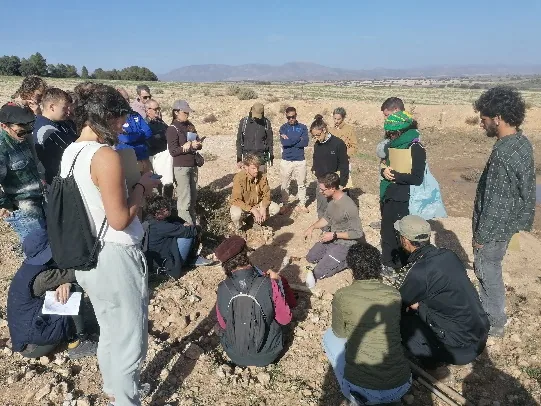
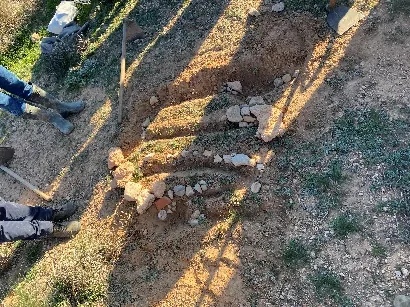
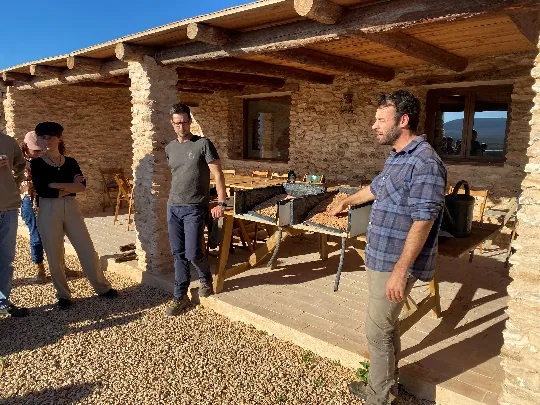
Why use a prop? Using a prop in an on-farm demo helps make information clear and practical by showing concepts in a tangible, real-world way, improving understanding and engagement for farmers and other demo visitors.
How should you use props? Start by choosing simple, relevant objects that clearly support the key message of your demo. Introduce the prop when it adds the most clarity and impact, explain what it represents, and actively use it during the event.
What Can a Prop Do?
- Demonstrate a process
- Start a discussion
- Create a sense of recognition
- Highlight climate urgency
- Attract and hold attention
- Make a comparison
- Show a result
Props can take many different forms. They can be physical, measurable, touchable, or shown side-by-side for comparison.
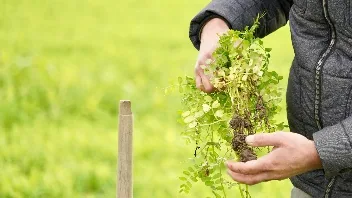
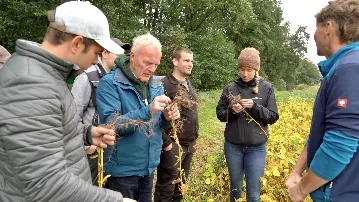
Something Physical
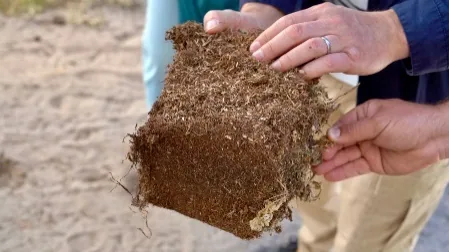
Show something physical. Also think about things that normally remain invisible, underground, or out of sight.
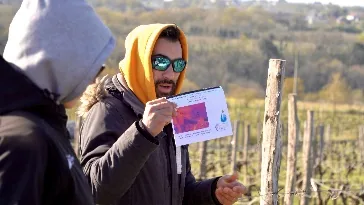
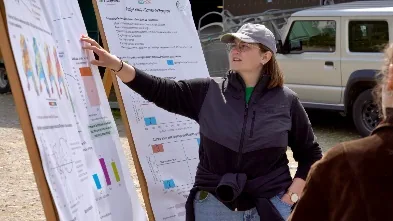
Something Measurable
Sometimes climate effects cannot be seen by the naked eye, but their effects can be measured.
Something Touchable
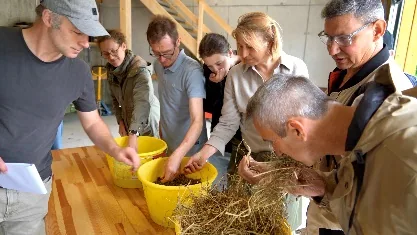
Let participants use their senses by letting them touch, smell, feel, or taste something.
Something Side-by-Side
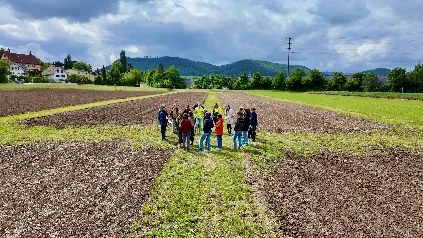
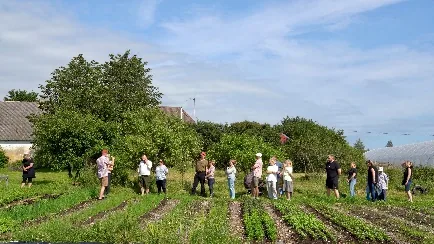
The effects of climate-smart farming can become visible when comparing different measures side-by-side.
All pictures above: Thomas Alföldi, FiBL.
Props Used During Climate Farm Demos
- The farm: fields, animals, crops, orchards, vineyards, pastures, and infrastructure can all be demonstration props.
- Machinery and technical equipment: tractors, mowing and spraying equipment, milking robots, precision tools, sensors, or drones.
- Digital tools: presentations, digital farm tools, simulators, and carbon calculators.
- Posters and banners: greenhouse-gas results, farm figures, climate risks, or climate measures.
- Soil and plant samples: soil pits, cover crop plants, forage and crop samples, biochar, compost, or probiotic preparations.
- Animals and animal products: feed samples, bedding materials, welfare monitoring tools, milk, cheese, butter, or meat.
- Monitoring tools: soil-moisture and pH meters, carbon-footprint tools such as CAP2ER, Cool Farm Tool, and Agrecalc, nitrogen sensors, or assessment tools.
- Interactive tools: scenario cards, pitch boards, postcards for personal objectives, quizzes, worksheets, or group exercises.
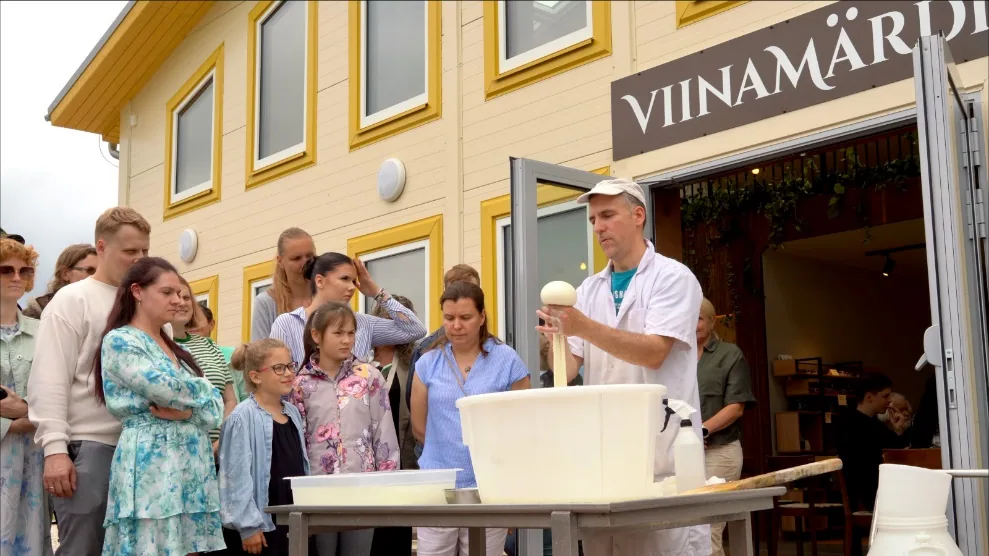
- Products: cheese, milk, wine, or fruit tastings, farm-shop visits, or meals prepared using farm produce.
Quotes and Examples
An example of how to use props from a Spanish demo event:
“For our demo event, a practical guide was prepared for participants explaining how to read the landscape for implementing water-retention techniques. Several practical and participatory exercises were also carried out, in which attendees built small-scale water-retention structures to improve understanding. An infiltration ring was also used to show how to calculate soil water-holding capacity. Finally, a laser level was demonstrated to show how to design infiltration strips and contour-line layouts.”
Spanish demo, 8-11-2025