





















Thematic Areas

12 Adaptation & Mitigation Thematic Areas covers all important aspects of climate change in agriculture

Thematic Sectors

7 thematic sectors covering all important aspects of climate change in agriculture

Grassland Management

Grassland management plays a crucial role in climate projects, as grasslands serve both as productive agricultural systems and as important carbon sinks. Sustainable grazing practices, optimized forage production, and biodiversity conservation can enhance soil health and carbon storage while reducing greenhouse gas emissions. By integrating scientific knowledge with practical farming experience, grassland management supports climate change mitigation, resilience of rural landscapes, and long-term food security.

Thematic Leaders

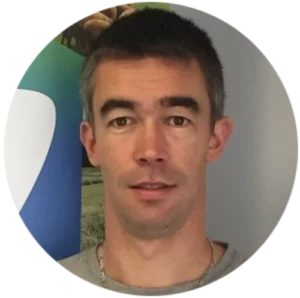
Paul Rober
I have a practical farming background, as I was born and raised on a farm. After completing my farming education, I decided to study agriculture at the University of Applied Sciences in Kiel, Germany. I am now working as an advisor at the Centre for Grassland in Lower Saxony, Germany. My main focus there is grassland management, especially grazing management.
Forage Production

The thematic area ‘Forage production’ focuses on sustainable forage production. Agro-environmental aspects and climate change adaptation and mitigation strategies will be considered. Agronomic topics such as crop rotations, conservative agriculture practices and carbon farming will also be addressed. The thematic area will relate to other closely related TA such as grassland management, soil health, manure spreading and rewarding mechanisms for the carbon credits topic.

Thematic Leader

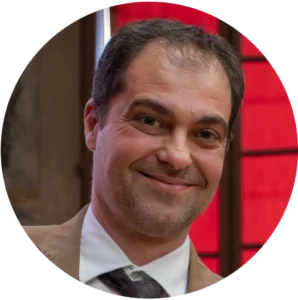
Alessandro Zatta
Organisation: CRPA

Background: Agronomist, he worked for more than 10 years at the University of Bologna dealing with industrial and fibre crops and later at a seed company and then in the biogas sector. He is currently a senior researcher at CRPA and works on forage production and conservation agriculture. TL in forage production and monitor of the LL FERTY in the CFD project, he is also NC in the CSA project.

Crops Management

The Crops Management thematic area focuses on how farmers can minimise GHG emissions associated with growing arable crops, whilst also maintaining, or increasing crop productivity. Topic areas include efficient use of fertilisers and organic materials, together with efficient use of energy for carrying out farm operations such as tillage and drying/storing crop produce. This theme will also consider crop management practices that can be used to mitigate the impacts of climate change on crop production.

Thematic Leader

Pete Berry


Organisation: ADAS

Background: Crop Physiologist with interest in helping farmers produce high yielding crops with a low carbon footprint

Ben Hague
 
Organisation: ADAS

Background: Crop Physiology Consultant with an interest to sustainably improve crop performance through an understanding of crop physiology and agronomy. Specialisms include arable crop nutrition and root growth.

Soil Health & Biodiversity

Soils and especially organic matter management are fundamental for sustainable production of feed and food and the regulation of material and energy cycles. It is generally accepted that healthy soils are closely linked with biodiversity, as a large share of the world’s biodiversity lives in, on and of soils. A healthy, organic matter-rich and diverse soil has the potential to become a win-win for the climate adaptation, sustainability and yield productivity of farming.
Therefore, knowledge transfer between science and farmers, farm advisors and policy makers is essential for making sustainable and profitable farm management decisions.

Thematic Leaders

Lin Bautze
Organisation: Research Institute of Organic Agriculture (FiBL)

Background: I am a researcher at FiBL Switzerland, the first research institute for organic agriculture. Since my studies in Environmental, Resource and Global Change Management, I am fascinated by the potential of organic agriculture to help reduce GHG emissions and to strengthen resilience. Soil health and it’s interlinks with biodiversity are for me a central topic to involve farmers into a discussion and at the same time can have a leverage to promote holistic sustainable farm management practices. Therefore, I am involved in various climate mitigation and adaptation EU and Swiss projects navigating from our soil science department at FiBL.

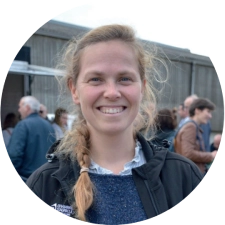
Markus Steffens
Organisation: Research Institute of Organic Agriculture (FiBL)
Background: I am senior researcher and group leader of the “soil fertility and climate group” at FiBL Switzerland. My research mainly focusses on the potentials and benefits of soils and especially soil organic matter management for sustainable food production under climate and global change (mitigation and adaptation). Among others, it covers research related to soil quality assessment, organic matter management including biochar, carbon sequestration and carbon farming and the application of IR spectroscopy and imaging techniques for the rapid and efficient assessment of soil quality.

Agroforestry and its Relation to Landscape

Agroforestry, the integration of trees and shrubs into agricultural landscapes, plays a key role in climate change adaptation. By enhancing biodiversity, improving soil health, increasing carbon sequestration, and interact with herd managment, agroforestry contributes to more resilient farming systems and sustainable landscapes

Thematic Leaders

Sixtine Fauviot
Organisation: Chambre d’agriculture Pays de la Loire

Background: I have 5 years of experience in innovation in food industries and 5 years in innovation in agriculture. I am in charge of a Chambre d’Agriculture de Région Pays de la Loire’s experimental farm in beef cattle, west of France. Agroforestry is a part of the Farm system and we take a big interest on trees according to climate change. I drive several research project about trees interest.

Energy Management

The European Commission has outlined several key missions to transform Europe’s energy landscape, aiming for sustainability, affordability, and security. The Energy Management area in CFD therefore focuses on optimising energy use (energy efficiency), on-farm production of renewable energy (using sources such as wind, solar, and biomass), and collaboration in energy management (e.g., energy cooperatives) to address these goals.

Thematic Leaders

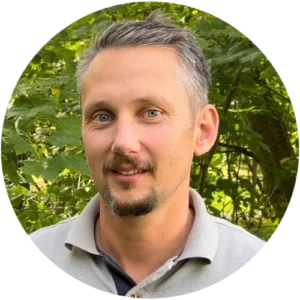
Marleen Gysen
Organisation: BBP

Background: I have 12+ years of experience in innovation in agriculture and advising farmers. At Boerenbond’s innovation department, I focus on integrating renewable energy on farms—matching energy demand with production, agrivoltaics, etc. I inspire farmers to think outside the box and support them in developing innovative energy solutions. I was a member of the EIP-Agri Focus Group on On-farm Renewable Energy.

Biogas Production

The Biogas Production thematic area focuses on how biogas systems can contribute to reducing greenhouse gas (GHG) emissions in agriculture while enhancing resource efficiency and energy security. Key topics include optimising feedstock use, improving the efficiency of anaerobic digestion processes, and maximising the climate benefits of biogas and biomethane production. Given its cross-sectoral nature, the biogas theme closely interacts with manure management, crop production, herd management, and renewable energy systems, supporting the transition to a circular and sustainable bioeconomy

Thematic Leaders

Anders Johansson
Organisation: Agroväst Livsmedel AB
Background: Project manager at Agroväst, with primary responsibility for our digital innovation hub SmartAgri. Actively involved in Agroväst’s strategic development, where agriculture’s role as an energy producer, including biogas production, is an essential area. Master of Science in Automation from Chalmers University of Technology, grew up on a farm, and runs crop cultivation as moonlighting business.

Water Management

The Water Management thematic area within the Climate Farm Demo (CFD) project focuses on the vital intersection between agriculture and efficient and sustainable water use. The aim is to address the impacts of climate change such as shifting weather patterns on water availability and demand. Knowledge exchange will focus on addressing regional differences and covering different impacts and challenges related to water management and the potential solutions found, particularly at farm-level.

Thematic Leaders

Maria Pereira da Silva
Organisation: CONSULAI

Background: With a BSc in Animal Science and an MSc in Agronomy, she has experience in livestock production and organic farming certification. She currently works in an agricultural consultancy as National Coordinator, Work Package Leader, and thematic area lead in an international project. Her role also covers business areas related to sustainability, combining technical expertise with strategic project management.
Herd Management

Herd Management is all about increasing efficiency. Major themes will be nutrition – food conversion and sourcing- genetics, housing, animal welfare , youngstock management. The use of data and new technology impacts in all of the above. In ruminants there will be a greater emphasis on decreasing embedded methane . Major connections to Enteric Methane, Grassland Management, Manure Management, Forage production , Energy and Biogas.

Thematic Leaders

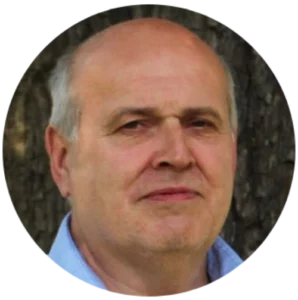
Richard Lloyd
Organisation: IfA

Background: Ex Dairy, Beef and Poultry farmer, and bovine geneticist. I work at Innovation for Agriculture as Precision Livestock Manager, with an emphasis on how real time decision making can improve farm profitability, animal welfare and reduce carbon footprint. Previously coordinated 4D4F (data driven dairy decisions for farmers) and network lead in the NEFERTITI project

Manure Storage & Spreading

The Manure Storage and Spreading area focuses on the efficient use of animal manures and digestates, spreading emissions, manure-related emissions from animal housings and animal welfare, manure storage, emission mitigation, manure management chain and its optimization. This area cooperates closely with the areas of biogas, herd management, crop management, pigs, poultry and forage production.

Thematic Leaders

Federico Dragoni
Organisation: ATB
Background: Agronomist, focuses on sustainability of crop-forestry-livestock systems. Member of the Italian Society for Agronomy since 2019, he managed and supported the coordination of the ERA-NET projects MilKey, MELS and DairyMix aimed at modelling sustainability and reducing GHG emissions of livestock systems.
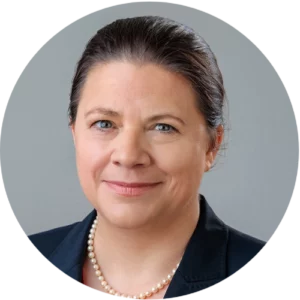
Barbara Amon
Organisation: ATB
Background: Senior Research Scientist at ATB; ATB executive board representative for research and associate Professor at the University of Zielona Góra (Poland); coordinator of the ERA-NET DairyMix project. She coordinated the ERA-NET projects MilKey, MELS and DairyMix. She serves on international panels including the IPCC, the Expert Panel on Nitrogen Budgets of the UNECE Task Force on Reactive Nitrogen, the EIP-AGRI and the FAO LEAP. She is Co-Chair of the Agriculture and Nature Panel of the UNECE Task Force on Emission Inventories and Projections, the TFRN Expert Panel on Mitigation of Agricultural Nitrogen and the FAO LEAP Technical Advisory Group on Circular Bioeconomy Approaches.

Additives for Reducing Methane Emissions

Methane is critical when adressing environmental issues for ruminants. A lot of solutions are available for reducing its emissions. One among others is the use of feed additives. The aim of the TL areas is to share scientific and technical information on all feed additives available on the market for farmers and for the dairy industry.

Thematic Leaders

Benoît Rouillé
 
Organisation: IDELE

Background: I have a background of agronomist specialized in animal production/dairy cattle. I work at Idele (French livestock Institute) since 2007. I spent 16 years as a project leader in dairy production and dairy feeding systems. Since 2024, I am head of the Climate Unit at Idele.

Vegetable Crops

Fruits and vegetables are essential in the diet. The vegetable sector can have a significant greenhouse gas (GHG) impact due to heated greenhouses. Even if greenhouses are a response to climate change (by protecting crops weather extremes), it is crucial to decarbonise this sector.

Thematic Leader

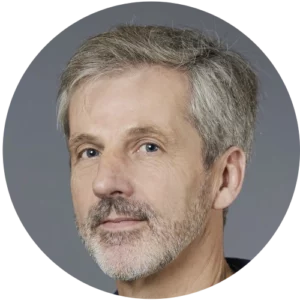
Ariane Grisey
Organisation: CTIFL

Background: She is the head of environment and energy unit in CTIFL (Technical Institute on fruit and vegetable in France). She is an engineer in fluid mechanism and thermal systems and she has been working in CTIFL for 2003. Her main areas of expertise are energy, climate control in greenhouses, carbon footprint and life cycle assessment. She has been involved in different trials to save energy for tomato greenhouse and studies to reduce environmental impacts on fruits and vegetables
Oil & Protein Crops

Oil and protein crops are crucial in the EU cropping systems, because they contribute to reduce environmental impacts and to improve the profitability for farmers. These crops are also a major source of proteins for feed and food.

Thematic Leader

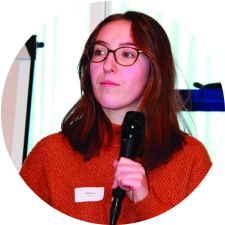
Francis Flenet
Organisation: Terres Inovia

Background: I am an agronomist, with a background of work in crop modelling, N crop fertilisation and in GHG evaluation. I was the head of a French program to measure and model N2O emissions in crop fields and of a program to reduce GHG emissions of biofuel crops.
Poultry Sector

The thematic area “Poultry” is quite transversal because it focuses on one specific production. Related to environmental issues, poultry is quite an efficient production, by emitting few GHG thanks to their metabolism. But they are also producing lots of ammonia because of their nitrogenous manure. This topic is really about covering all the aspects of the poultry production leading to GHG emissions and to finding ways to reduce them. And these solutions should be feasible for the farmers , on both technical and economical sides.

Thematic Leader

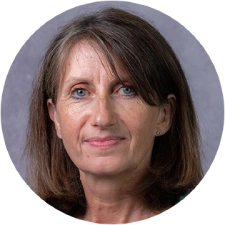
Enora Caron
Organisation: ITAVI

Background: I work at the Environment Department at ITAVI (French Technical Research Institute on Poultry productions, including rabbits and fishes). I am an engineer in animal productions, and I have been working at ITAVI since 2021. I specifically work on pollutant emissions (GHG, ammonia, particulate matter..) and how they diffuse in livestock building and storage of the manure. I am currently developing the CAP’2ER tool to calculate environmental contributions adapted to poultry. I am eager to find ways to help farmers to go through this environmental crisis.
Pigs Sector

The pig thematic area is cross-cutting with other thematic areas. Pig production is affected by regulations on ammonia emissions in the EU, but reducing greenhouse gas emissions is becoming a major challenge, and pig farmers will have to integrate the decarbonisation of their production. Effluent management and feed are the main sources of greenhouse gas emissions, and solutions do exist, but they need to be implemented taking into account their technical feasibility and the sustainability of the farm.

Thematic Leader

Annie Soulier
Organisation: IFIP

Background: I work at the livestock technical centre of the IFIP (Institut technique agricole de la filière porcine). I’m an environmental engineer and have been working at IFIP since 2020. My work involves developing a method for recognising GHG emission reductions for French pig farming (LBC porc). I’m also developing the GEEP environmental assessment tool for pig farms. I’m working on effluent management (building and storage) and associated gaseous emissions.

Organic Sector

Around 20-25% of the farms involved in Climate Farm Demo are organic. The organic sector in the project focusses on addressing the special issues that organic farming faces in relation to climate change mitigation and adaptation. Organic farming offers a systemic approach to reducing greenhouse gas emissions and increasing soil carbon sequestration while sustaining healthy soils and protecting biodiversity. Additionally, we aim to share our insights and successful practices with conventional farmers, demonstrating how organic methods can benefit climate resilience and biodiversity.

Thematic Leader

Lisa Sinnhuber
Organisation: IFOAM Organics Europe

Background: I’m a Research and Innovation officer at IFAOM Organics Europe, the European umbrella organisation for organic food and farming. My academic background is in social ecology, with a focus on sustainable agriculture and nutrition. I gained hands-on experience working for two seasons on an organic vegetable farm in Massachusetts, USA, where I gained insights into the daily challenges faced by farmers. At IFOAM Organics Europe, I have been implementing various Horizon projects, with a special focus on climate-related projects like ClieNFarms and OrganicClimateNET.

Fruits Crops

Fruits and vegetables are essential in the diet. Unfortunately, the fruit sector is a huge consumer of plant protection products and fertilizers that directly cause its environmental impact. But on the other hand, the tree production is a real key for carbon sequestration, and we have to develop it. It will be really instructive to know more about the carbon sequestration dynamics in the trees.

Thematic Leader

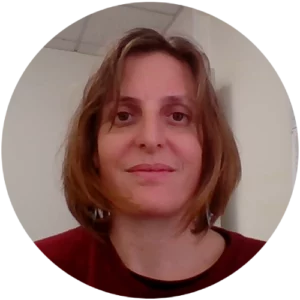
Mireur Malou
Organisation: CTIFL
Background: I have been working in the Environment and Energy Unit at CTIFL (Technical Institute for Fruits and Vegetables in France) since 2022. I am working primarily on the carbon footprint of farms and life cycle assessment. I have been involved in different studies to reduce environmental impacts on fruits and vegetables.

Crops Sector

The cereal thematic is transversal to other themes. It is hard to describe the thematic at the European level. Cereal crops thematic face different challenges due to climate change (water availability, extreme temperatures, weeds, new diseases…)

Thematic Leader

Sophie Gendre
 
Organisation: Arvalis

Background: I work for Arvalis, French technical institute for cash crops. I have 10 years experience in water quantity management for cereal crops in France. I also manage the agronomy team which work on fertilisation, soil and water